
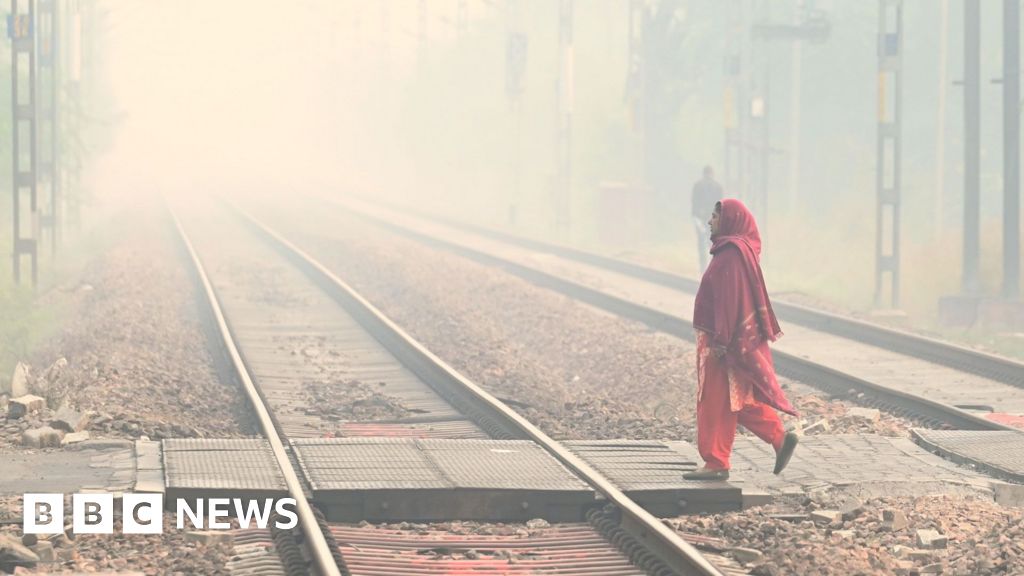
In northern India, November often brings poor air quality, prompting residents to check air quality indices as part of their daily routines. The reported air quality can differ significantly between government-backed apps, such as SAFAR and SAMEER, and private or international platforms, including IQAir and AQICN. While government monitors report figures capped at 500, private services frequently register levels exceeding this threshold, occasionally surpassing 1,000, raising questions about the reliability of these numbers and the reasoning behind the 500 cap in official reports.
India’s air quality index (AQI) categorizes readings above 200 as potentially harmful, while those exceeding 400 are classified as “severe.” This cap of 500 was established over a decade ago when the National Air Quality Index was introduced, primarily to prevent public panic in the face of extreme pollution levels. However, experts note that this cap simplifies the data by equating all values above 500, despite the potential for much higher pollution levels.
According to Gufran Beig, founder director of SAFAR, no global standard for AQI exists; countries, including the U.S., China, and the European Union, each use distinct pollutant thresholds. Moreover, there’s a notable discrepancy in defining hazardous air. The World Health Organization classifies PM2.5 levels exceeding 15 micrograms per cubic meter in 24 hours as hazardous, while India sets this threshold at 60 micrograms.
Furthermore, the monitoring techniques differ; India primarily uses Beta Attenuation Monitors (BAMs), which are rigorously calibrated, contrasting with sensor-based technologies employed by platforms like IQAir, which do not require such stringent calibration. This discrepancy raises concerns about the accuracy and governmental acceptance of different monitoring methods. Many experts advocate for a reassessment of India’s air quality framework to integrate modern techniques and potentially remove the existing upper threshold to reflect ongoing health impacts associated with worsening pollution.
Source: https://www.bbc.com/news/articles/ced6jgg0180o?at_medium=RSS&at_campaign=rss