
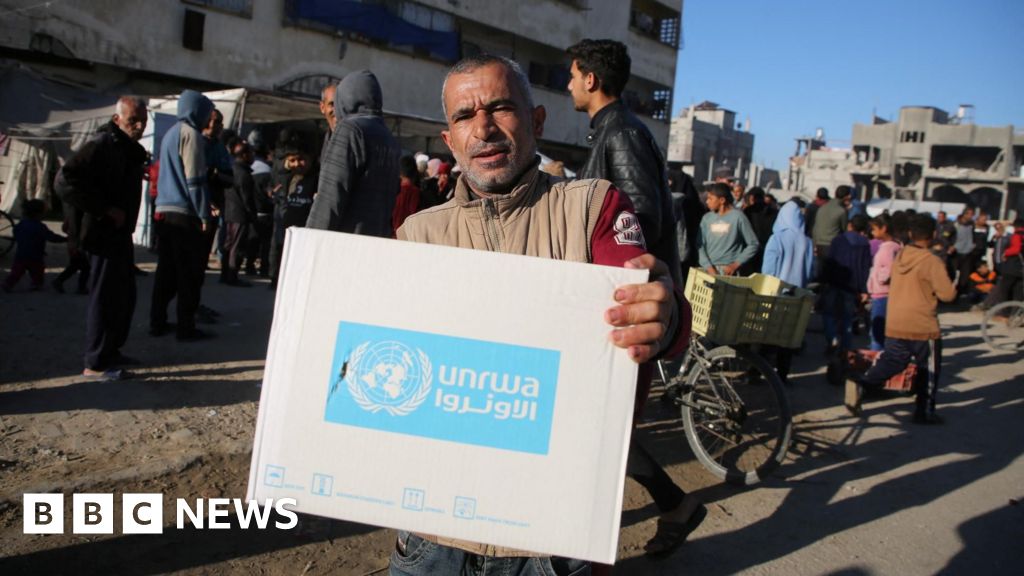
The International Court of Justice (ICJ) is set to provide an advisory opinion regarding Israel’s legal obligations towards United Nations agencies and international organizations active in the occupied West Bank and Gaza Strip. This follows a request from the UN General Assembly made last year, after Israeli legislation prohibited the UN agency for Palestinian refugees (UNRWA) from operating on Israeli territory and from contacting Israeli officials.
Israel has accused UNRWA of being influenced by Hamas, a claim the agency denies, asserting its impartiality. The ICJ will also examine Israel’s responsibility to facilitate the delivery of essential supplies to Palestinians. Since the onset of conflict with Hamas two years ago, Israel has tightened its blockade of Gaza, significantly restricting the entry of food and aid for the area’s 2.1 million residents. Prior to a recent ceasefire, UN experts estimated that over 640,000 individuals faced severe food insecurity, describing a “man-made” famine in Gaza City, which Israel contests, claiming it allows adequate aid and attributing shortages to Hamas’s misappropriation of resources.
The ICJ is tasked with addressing two questions from the UN General Assembly’s resolution: whether Israel’s ban on UNRWA violates UN provisions ensuring the independence of UN agencies, and whether Israel’s restrictions on aid transfers into Gaza contravene international humanitarian law, particularly its obligations as an occupying power.
The hearings commenced in The Hague, where the UN’s Under-Secretary General for Legal Affairs highlighted Israel’s obligations as an occupying power to enable UN agencies to assist the local population. Israel views these proceedings as a political maneuver undermining its right to defense and its obligations under international law, arguing that no state should be required to compromise its security.
UNRWA, which employs 12,000 Palestinian staff, disputes Israel’s claims of having Hamas affiliates within its ranks, while also noting that allegations against its personnel have led to dismissals and investigations. The agency continues to deliver services despite constraints imposed by Israeli law. The current ICJ proceedings represent a significant inquiry into a UN member state’s ability to exclude a UN agency from its territory, raising broader implications for international law and UN institutional legitimacy.
Source: https://www.bbc.com/news/articles/c17pqxzl0yzo?at_medium=RSS&at_campaign=rss