
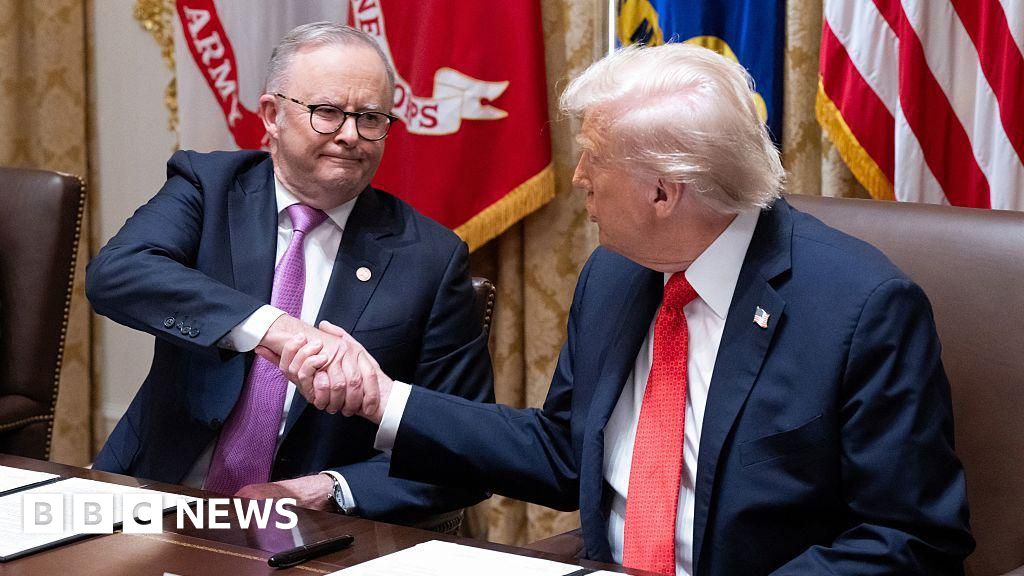
The United States and Australia have formalized a new agreement aimed at enhancing collaboration on rare earths and critical minerals, a move motivated by concerns over China’s significant market dominance. The deal is designed to support approximately $8.5 billion (A$13 billion) in mining and processing initiatives in Australia. As part of the agreement, both nations will invest $1 billion over the next six months into related projects in the US and Australia.
Australian Prime Minister Anthony Albanese highlighted that this agreement represents an advancement in the partnership between the two nations, which has been developing since Donald Trump’s first term as President. In conjunction with this initiative, Trump affirmed that Australia would proceed with its multi-billion-dollar submarine deal with the US and UK, known as Aukus.
This submarine arrangement has faced scrutiny, particularly regarding the potential impact of the “America First” policy, which raised questions about Australia’s ability to procure new submarines. Trump asserted that Australia would indeed receive the submarines.
Currently, China controls around 70% of rare earth mining and 90% of the processing, making the US heavily reliant on these materials, especially as China has implemented supply restrictions amidst escalating trade tensions. The new agreement aims to expedite investment in processing facilities in Australia and involves cooperative efforts on pricing, regulatory approvals, and oversight of sector acquisitions.
Moreover, the US plans to invest in a new gallium refinery in Western Australia and is set to provide approximately $2.2 billion in financing for critical minerals projects through its Export-Import Bank. Recent announcements from the Trump administration have indicated investments in companies involved in US mining and processing initiatives, marking a shift in focus to reduce reliance on China. The details of the framework, however, remain limited, reflecting the complex dynamics at play in this sector.
Source: https://www.bbc.com/news/articles/cly9kvrdk2xo?at_medium=RSS&at_campaign=rss