
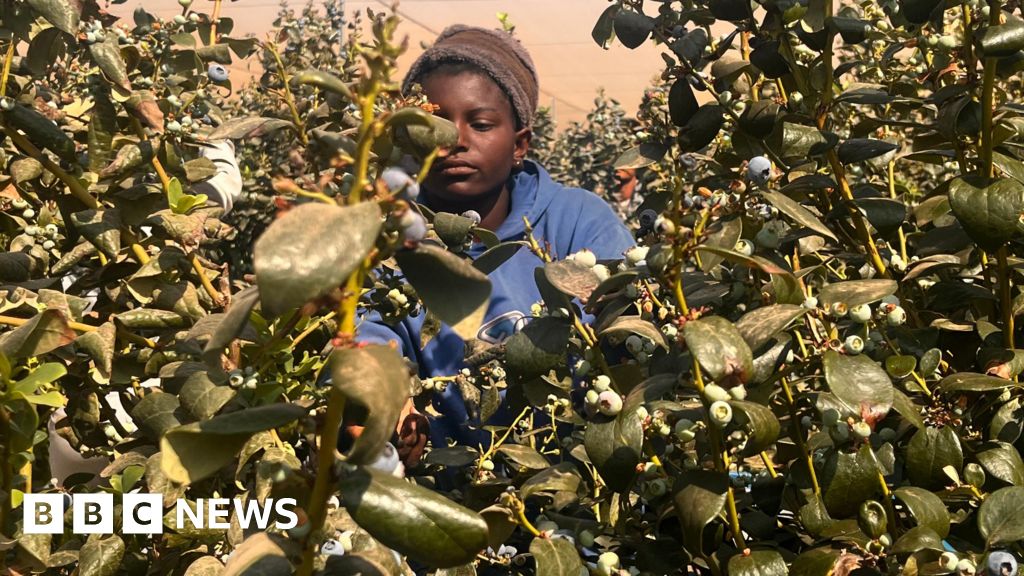
Zimbabwe, the leading tobacco producer in Africa, is exploring the potential of blueberries as a significant agricultural crop. Recent trade negotiations with China, noted for being the world’s largest importer of blueberries, have marked a pivotal moment for Zimbabwe’s agricultural ambitions, positioning the country to become a central player in the blueberry market on the continent.
In 2022, Zimbabwe’s tobacco sales reached $1.3 billion, driven in part by an increase in smokers in China. By comparison, blueberry exports were significantly lower at $30 million, yet horticulture expert Clarence Mwale maintains that there is significant potential in this emerging sector. China has agreed to import Zimbabwean blueberries tariff-free, which could offer a beneficial uplift to the nation’s economy, particularly as farmers work to meet China’s compliance standards regarding pest and disease control.
Farmers like Alistair Campbell, a co-owner of a high-tech blueberry farm near Harare, emphasize the importance of quickly capitalizing on this new market opportunity. The farm employs advanced techniques, such as eight daily waterings and post-harvest refrigeration, to ensure high-quality produce. With current exports to Europe, the Middle East, and Southeast Asia, gaining access to the Chinese market could substantially increase revenue once the necessary compliance is achieved.
Zimbabwe aims to increase blueberry production to 30,000 tonnes by 2030, with projections indicating a 50% rise to 12,000 tonnes this year. Meanwhile, Morocco leads Africa in blueberry production with over 80,000 tonnes expected in 2024, followed by South Africa at 25,000 tonnes.
Despite the promising outlook, concerns regarding economic stability and land security remain, reflecting a legacy of past agricultural reforms. The blueberry sector, currently employing around 6,000 people, predominantly women, is seen as a viable option for job creation in a country facing significant economic challenges. Efforts are also underway to involve more small-scale farmers in blueberry cultivation, aiming to diversify and capitalize on newly opened export markets.
Source: https://www.bbc.com/news/articles/c5y5qllgpgzo?at_medium=RSS&at_campaign=rss