
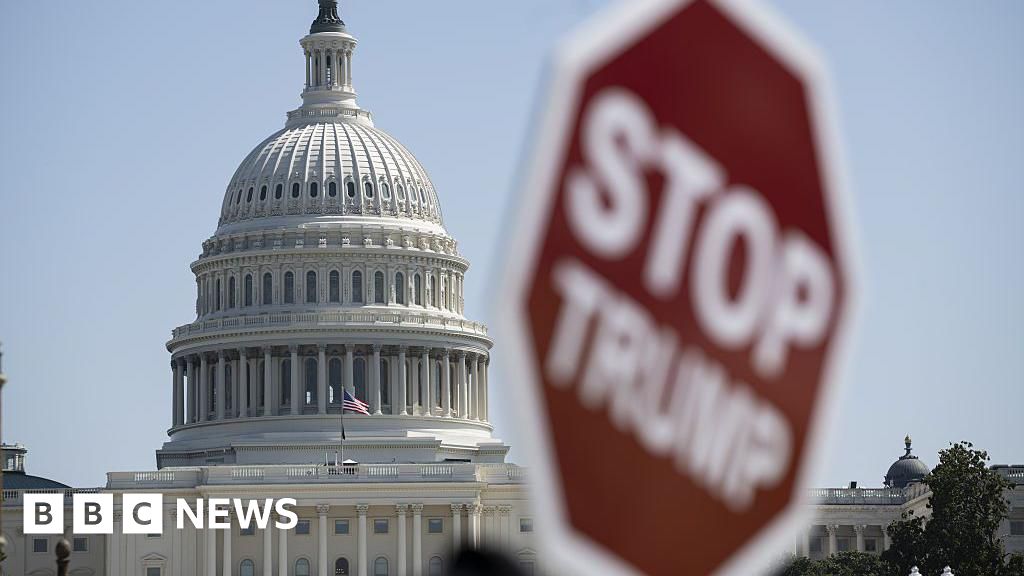
Funding for the US government is set to end at the close of Tuesday unless the Republican Party, led by President Donald Trump, can reach an agreement with opposition Democrats on a spending bill. A government shutdown could temporarily halt certain services, as historical budget standoffs have shown common occurrences in US politics, but the current situation is particularly tense due to Trump’s recent cuts to the federal government.
The key issue driving potential shutdown appears to be the inability of both parties to agree on a funding bill that would extend government services into October and beyond. While Republicans control both chambers of Congress, they lack the 60 votes necessary in the Senate to pass a spending bill. Consequently, Democrats hold considerable leverage, refusing to support a Republican-proposed bill that they argue would hinder access to healthcare. Their demands include extending tax credits that lower health insurance costs and reversing Medicaid cuts, as well as opposing spending cuts to health agencies like the CDC and NIH. A stopgap bill has passed in the House but has not yet been approved by the Senate.
If negotiations fail, a shutdown would begin at 00:01 EDT on Wednesday, marking the first such occurrence in nearly seven years. The last shutdown occurred at the end of 2018. Notably, President Trump is scheduled to meet with congressional leaders to discuss the standoff, but he has cast doubts on whether an agreement can be reached.
The likelihood of a shutdown currently seems high. Trump administration officials have been reluctant to offer significant concessions, believing that Democrats will face public backlash for the impasse. Conversely, Democrats are pushing to maintain healthcare subsidies, as their leaders are under pressure from activists who feel they previously conceded too easily.
Notably, while a shutdown would not halt all government functions—essential services like border protection and law enforcement would continue—many other services would likely be suspended. Essential workers would remain on duty, though some may go unpaid temporarily, while non-essential employees would be put on leave.
Historically, government shutdowns are not unusual in the US, with several instances occurring over the past 50 years. Past shutdowns have impacted economic output, reminding many of the delicate balance in US politics where multiple branches must agree on budgetary issues before spending can continue.
Source: https://www.bbc.com/news/articles/crrj1znp0pyo?at_medium=RSS&at_campaign=rss