
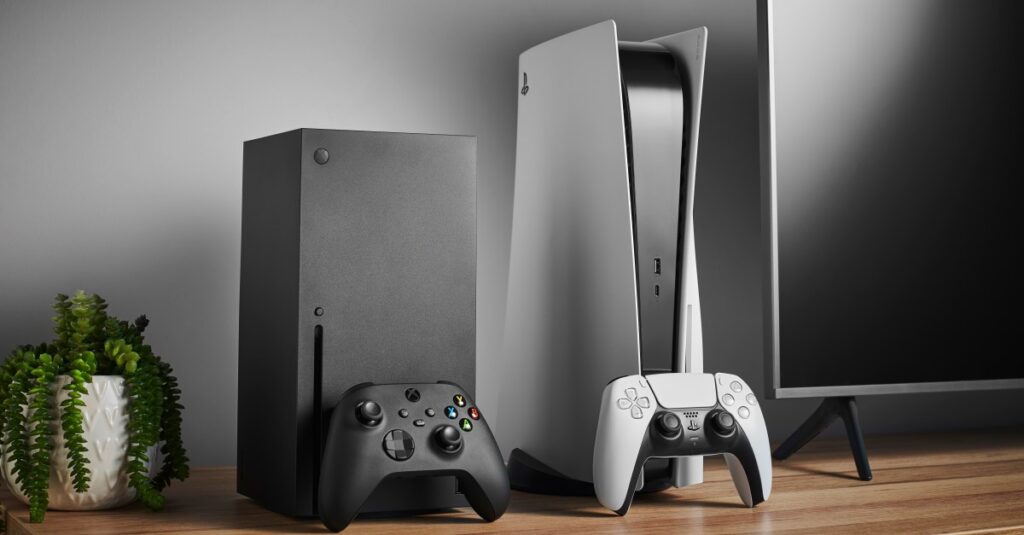
The gaming industry has seen a significant transformation over the years, particularly in the landscape of console competition, formerly termed the “console wars.” Historically, Sony’s PlayStation and PlayStation 2 achieved great success, selling over 100 million units each, which prompted a cycle of increased game sales and developer interest. However, the dynamics began to change as new competitive strategies emerged.
Initially, console makers attracted consumers through exclusive games, creating a sense of urgency to purchase specific systems for titles like Final Fantasy VII and Halo. In the mid-2000s, Microsoft gained momentum with the Xbox 360, focusing on multiplayer capabilities to engage social gaming networks, thus impacting customer purchasing decisions.
As hardware evolved, Sony’s introduction of the PlayStation 3 faced criticism due to its complex architecture, which made game development challenging. Following this, future consoles from both Sony and Microsoft adopted AMD x86 architecture, aligning more closely with personal computers. This shift facilitated the development of multiplatform game engines that made it easier for game developers to target multiple consoles simultaneously.
Today, the concept of console exclusivity is evolving, with many games transitioning to “timed exclusives,” often appearing on multiple platforms, including PC, at launch or shortly thereafter. For instance, Sony’s recent release, Helldivers 2, became the best-selling game on Xbox after its launch there, illustrating a growing trend towards broader distribution strategies.
Despite these changes, both companies continue to develop new consoles. Microsoft has indicated plans for its next-generation Xbox, while Sony’s approach appears to likewise be shifting towards a greater emphasis on game distribution across platforms. This raises questions about the future role of dedicated gaming hardware: are consoles becoming less essential as game distribution models evolve? As the industry adapts, it remains evident that while consoles may still play a fundamental role, the focus is increasingly on the games themselves rather than the specific hardware used to play them.
Source: https://www.theverge.com/column/781303/microsoft-sony-playstation-xbox-future-of-gaming-console