
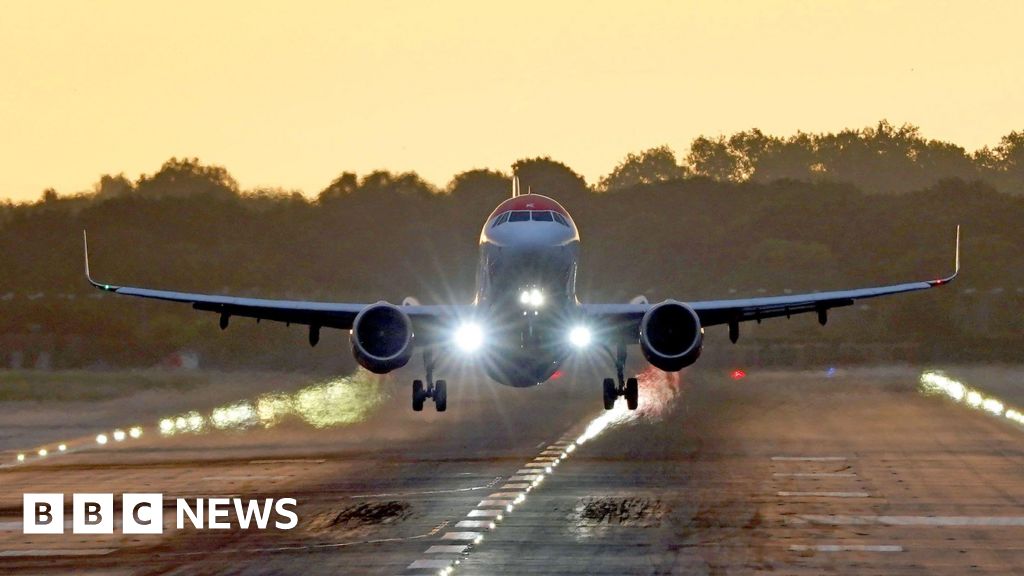
The potential expansion of airports in the UK raises significant questions about future air travel emissions. Gatwick’s proposal for a second runway could introduce an estimated 100,000 additional flights annually, while a third runway at Heathrow could add around 276,000 flights. Luton airport’s approved expansion further complicates these projections. As the UK aims to achieve net-zero emissions by 2050, considerable reductions in aircraft emissions will be necessary to reconcile increased air traffic with climate goals.
Replacing older aircraft with newer, more fuel-efficient models, such as the Airbus A320neo, which offers a 15-20% increase in fuel efficiency, is one approach to reducing emissions. However, experts caution that this measure alone will not suffice to meet long-term emissions targets. The UK’s Climate Change Committee (UKCCC) has highlighted the growing emissions from air travel, which rose by 9% last year, largely due to rising demand for international leisure flights, particularly at Gatwick.
The UK has legally binding targets for reducing greenhouse gas emissions, in alignment with global efforts to limit temperature increases to 1.5 degrees Celsius. Decisions regarding airport expansions will need to be weighed against these climate objectives, as they could significantly influence the nation’s carbon budgets.
In this context, there is increasing reliance on sustainable aviation fuels (SAF), derived from various sources including waste oils and agricultural byproducts. While SAFs can reduce emissions compared to fossil fuels, their production is currently limited and costly. The government is working to expand the market for SAF through mandates and potential financial support mechanisms designed to stabilize prices and incentivize production.
Future advancements in zero-emission technologies, such as hydrogen-powered aircraft, promise long-term solutions but require significant investment and infrastructure development. Electric or hybrid planes also present opportunities, though their viability for long-haul flights remains uncertain at this stage.
Source: https://www.bbc.com/news/articles/cx2jpn881w0o?at_medium=RSS&at_campaign=rss