
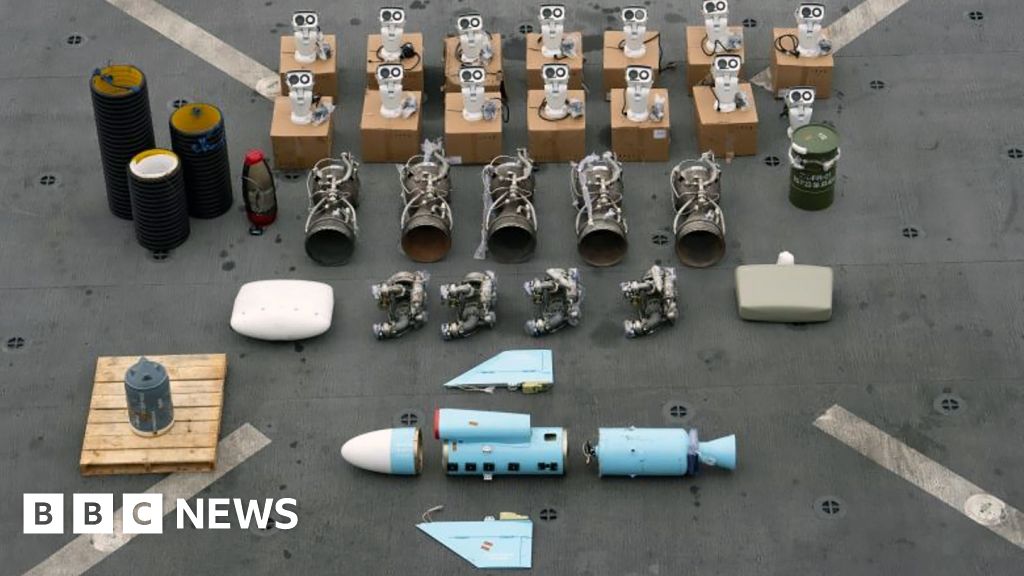
Muhammad Pahlawan, a Pakistani national, has been sentenced to 40 years in a U.S. prison for using a fishing boat to smuggle ballistic missile parts from Iran to the Houthi rebels in Yemen. He was apprehended during a U.S. military operation in January 2024, which resulted in the drowning of two U.S. Navy SEALs.
During the trial, crew members testified that they had been misled into believing they were working as fishermen. At the time of the smuggling attempt, the Houthis were reportedly engaged in missile and drone attacks on Israel and other targets in the region, citing support for Palestinians. Iran has consistently denied supplying the Houthis with arms.
The U.S. federal prosecutors described the weapons found on board Pahlawan’s boat as sophisticated systems linked to Iranian support for various militant groups. Pahlawan was charged with multiple counts, including terrorism and transporting weapons of mass destruction. His conviction included a cumulative sentence of 480 months.
Testimonies revealed that the crew, comprised of men from Pakistan, were largely unaware of the contents of their cargo. They also described Pahlawan’s behavior during the voyage, noting that he often isolated himself while communicating discreetly via satellite phone. On January 11, U.S. Navy forces attempted to intercept the boat, resulting in a chaotic scene that ultimately led to the deaths of two Navy SEALs.
Pahlawan’s financial compensation for the trip was characterized as “danger money,” and the smuggling operation was reportedly coordinated by two Iranian brothers affiliated with Iran’s Islamic Revolutionary Guard Corps, designated a terrorist organization by the U.S. Pahlawan had previously completed two successful smuggling missions prior to his capture.
The U.S. military stated that this operation marked a significant seizure of Iranian arms bound for the Houthis, indicating a broader pattern of arms smuggling in the region, which has seen extensive efforts by U.S. forces to intercept such activities over the years.
Source: https://www.bbc.com/news/articles/cwy534vw28go?at_medium=RSS&at_campaign=rss