
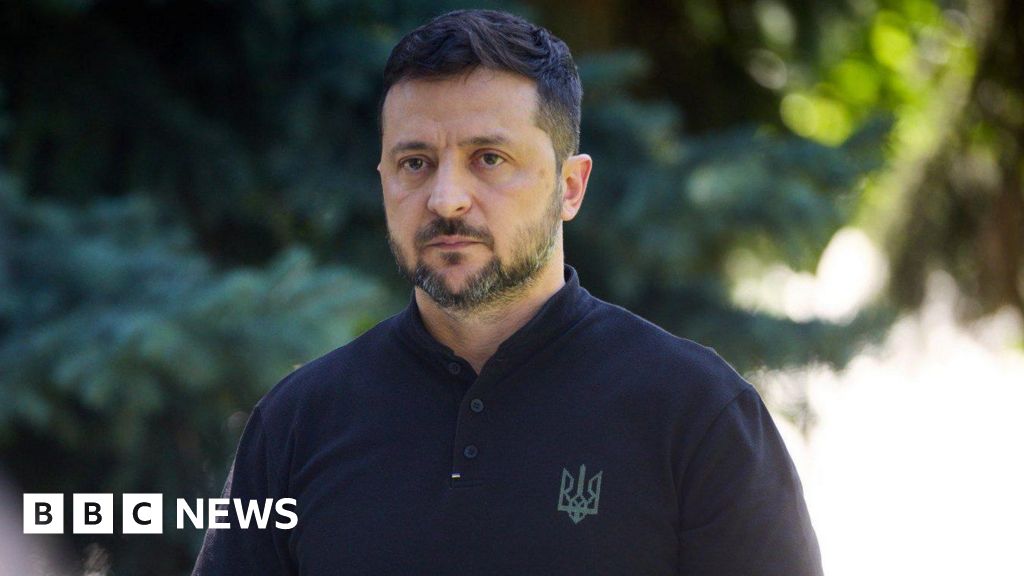
Ukrainian President Volodymyr Zelensky has dismissed the idea of establishing a buffer zone between Ukrainian and Russian forces as part of a potential peace agreement. He argued that such a proposal does not accurately reflect the current realities of modern warfare, particularly given advancements in drone technology. European leaders had reportedly considered a 40km (25-mile) buffer zone aimed at facilitating a ceasefire or longer-term arrangement.
Zelensky pointed out that an informal buffer already exists along the front lines, where the presence of drones restricts the operation of heavy artillery. He stated that heavy weapons are currently positioned more than 10km apart due to drone threats, coining the term “dead zone” or “grey zone” to describe the area.
Moreover, the proposed buffer zone might require Ukraine to concede some territory, a notion Zelensky firmly opposed, suggesting that if Russia seeks distance, it should retreat to its occupied territories. He contended that Russia is not inclined towards genuine diplomacy and is looking for ways to prolong the conflict.
A recent US-led diplomatic initiative to resolve the ongoing war, which has lasted over 40 months, appears to be losing momentum. While a meeting last week involving US President Donald Trump, Zelensky, and European leaders raised hopes for a summit between Zelensky and Russian President Vladimir Putin, those expectations have diminished. German Chancellor Friedrich Merz indicated that such a meeting is unlikely, citing Putin’s apparent reluctance.
Earlier this week, Russia conducted a significant drone attack on Kyiv, resulting in multiple casualties, which has drawn condemnation from European leaders. In response to these escalations, EU foreign policy chief Kaja Kallas criticized Russia’s attacks on civilians and infrastructure, calling them a setback for peace efforts.
In light of these developments, discussions between Ukrainian officials and US representatives are ongoing, focusing on securing Ukraine with potential “Nato-like” commitments for protection. However, the Russian foreign ministry has criticized Western proposals as biased and reiterated the need for security guarantees that account for Russia’s interests.
Source: https://www.bbc.com/news/articles/c04r0z1pr25o?at_medium=RSS&at_campaign=rss