
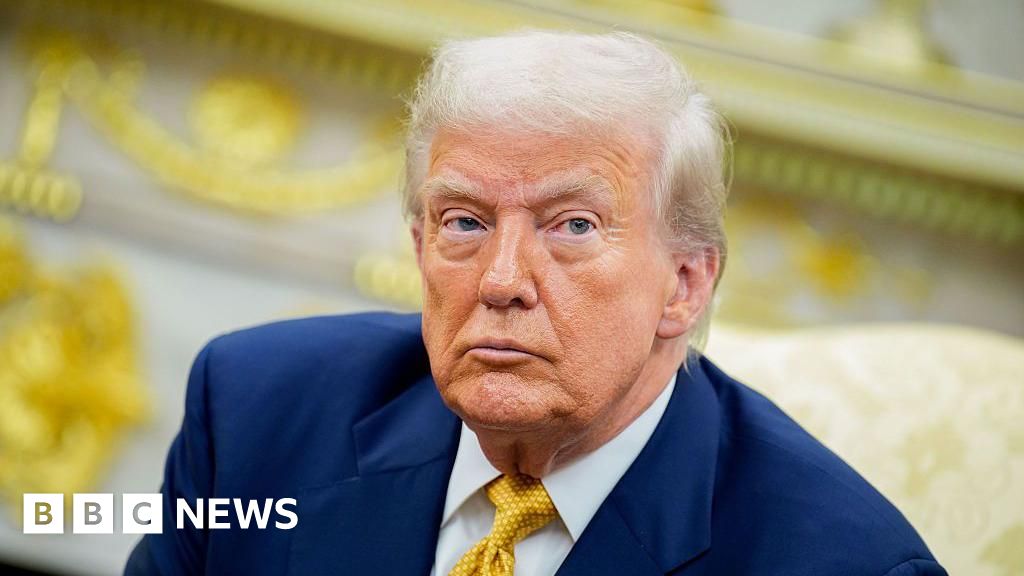
A US appeals court has determined that many tariffs imposed by former President Donald Trump are illegal, marking a significant legal development with potential implications for his foreign policy approach. The ruling particularly affects Trump’s “reciprocal” tariffs implemented on various countries as well as those targeting China, Mexico, and Canada.
In a 7-4 decision, the US Court of Appeals for the Federal Circuit rejected Trump’s assertion that the tariffs were allowable under the International Emergency Economic Powers Act (IEEPA), stating that the tariffs are “invalid as contrary to law.” The court ruled that the authority to impose such tariffs resides primarily with Congress rather than the executive branch. This decision is set to take effect on October 14, providing time for the administration to request a Supreme Court review.
Trump has publicly criticized the ruling, asserting on Truth Social that if upheld, it would have damaging consequences for the United States. He argued that the removal of these tariffs would weaken the nation’s financial position and expressed confidence that the Supreme Court would overturn the decision.
The court’s 127-page ruling noted that the IEEPA does not specifically mention tariffs and lacks provisions that impose limits on presidential authority in this context. The judges emphasized that Congress has historically retained the power to impose tariffs. It was also indicated that when Congress enacted the law in 1977, it likely did not intend to grant the president unrestricted powers regarding tariffs.
This ruling follows lawsuits initiated by small businesses and several US states challenging the legality of Trump’s tariffs imposed in May, which included a blanket 10% tariff on all countries as part of his broader trade strategy. Notably, the decision does not impact other tariffs, such as those on steel and aluminum, which were implemented under different presidential authorities.
Source: https://www.bbc.com/news/articles/ckgj7jxkq58o?at_medium=RSS&at_campaign=rss