
The United Nations climate negotiations, known as COP30, concluded in Belém, Brazil, with a mixed outcome. The event, running for two weeks, aimed to advance commitments made during previous climate agreements, including the 2015 Paris Agreement. Participants included delegates from over 190 nations.
Despite expectations, the talks did not yield significant progress on transitioning away from fossil fuels. Organizers described the conference as focused on implementation, yet many felt it culminated in only vague promises for future action. Notably, two initiatives—a roadmap for phasing out fossil fuels and another for halting deforestation—failed to be formalized in the final agreement.
Indigenous groups and environmental advocates pointed out contradictions in the conference’s execution. Massive infrastructure changes, such as highway construction and the use of diesel-burning cruise ships for accommodation, raised concerns about the ecological impact of hosting the event in a vital rainforest region. Protests occurred, with demonstrators, including members of the Munduruku people, advocating for stronger protections of their land and resources.
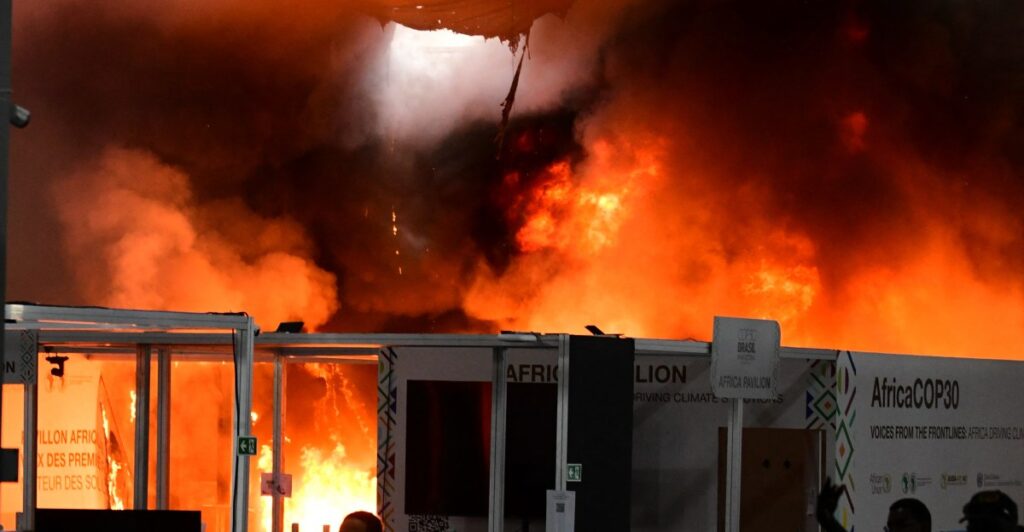
The conference experienced disruptions, including an evacuation due to a fire at the venue shortly before its conclusion. This incident further complicated the negotiations, which were already pressured to conclude efficiently.
While Brazil recognized the establishment of ten new Indigenous territories and pledged additional funding for climate initiatives, these points were viewed as insufficient compared to the urgency of climate actions required. Criticism emerged, notably from climate advocates like Mary Robinson and Ife Kilimanjaro, who expressed disappointment over the lack of commitment to addressing fossil fuel dependency directly.
Overall, COP30 emphasized ongoing challenges to global cooperation in climate action, underscoring the complexities of achieving substantial agreements amid national interests and the continuing influence of fossil fuel industries.
Source: https://www.theverge.com/report/828270/un-climate-change-negotiations-fizzle