
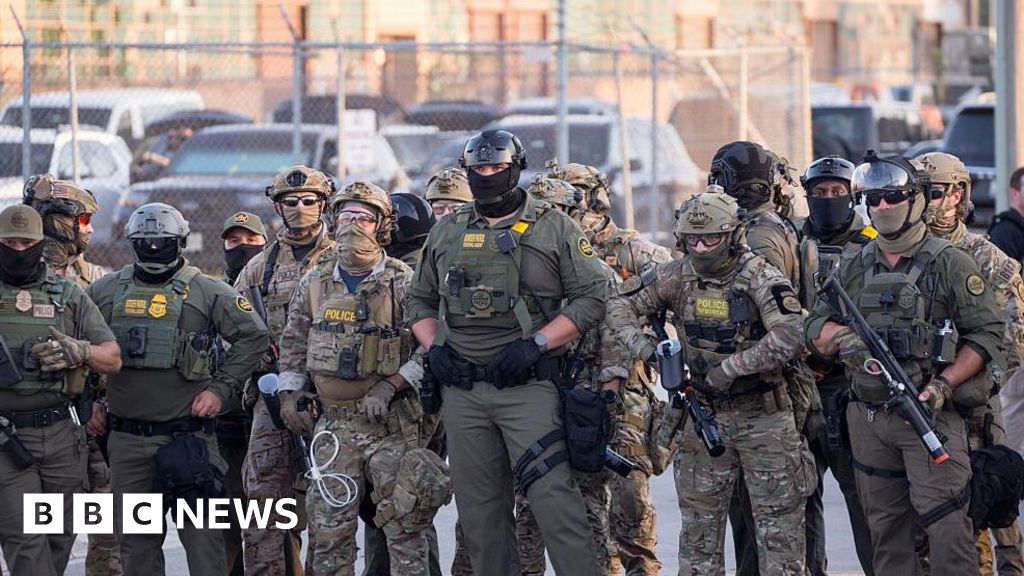
President Donald Trump has authorized the deployment of 300 National Guard troops to Chicago to address what he characterizes as escalating crime levels. This decision follows an altercation in which immigration authorities reportedly shot an armed woman during a confrontation with protesters who attempted to ram their vehicles into law enforcement units.
Local and state leaders, including Illinois Governor JB Pritzker, have criticized Trump’s deployment plans, asserting it constitutes an abuse of power. Pritzker specifically accused Trump of “attempting to manufacture a crisis.” The announcement coincides with a federal judge in Portland, Oregon, temporarily blocking a similar deployment of 200 troops in that city, labeling Trump’s comments about the situation as “untethered to the facts” and stating that such military actions without state consent could violate constitutional principles.
Judge Karin Immergut highlighted concerns regarding the potential blurring of civil and military authority, suggesting that these actions could escalate tensions and provoke further protests. As of now, it remains uncertain whether the National Guard troops have arrived in Chicago, and legal challenges are anticipated regarding this deployment.
Chicago, among other major cities, has become a focal point for discussions about military interventions in domestic affairs, a move which raises both legal and constitutional challenges. Traditionally, National Guard troops are deployed by state governors, and established laws restrict the federal government’s use of military forces in domestic situations.
In recent weeks, Chicago has experienced an uptick in protests related to immigration enforcement, particularly outside U.S. Immigration and Customs Enforcement facilities. The latest violence, involving the shooting of a woman by Border Patrol personnel, adds to the already charged atmosphere. Trump’s administration maintains that these actions are necessary to restore order, yet statistics reveal that while violent crime has decreased significantly in Chicago over the past two years, the city’s crime rates remain higher than many others in the U.S.
Source: https://www.bbc.com/news/articles/c2dnk0ee6pyo?at_medium=RSS&at_campaign=rss