
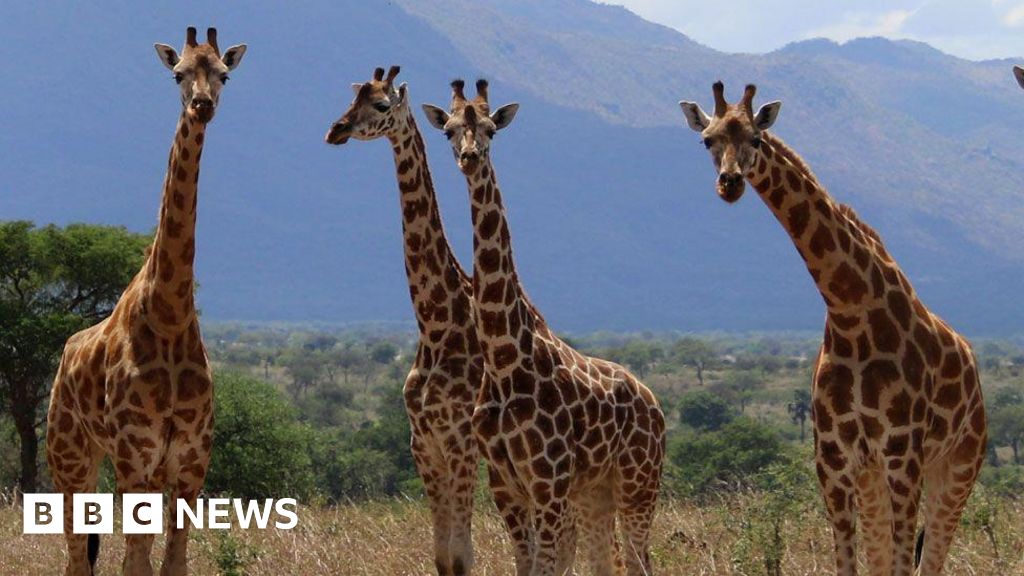
Recent findings by scientists from the International Union for Conservation of Nature (IUCN) have identified four distinct species of giraffes, rather than the previously held belief that there was only one species. This new classification is based on genetic diversity and skeletal analysis, including comparisons of skull sizes and head shapes among giraffes.
The research indicated that geographical barriers, such as rivers and deserts in Africa, may have led to the separate evolution of these groups. The newly recognized species include the Southern, Reticulated, Northern, and Masai giraffes, each occupying different regions across the continent.
The Southern giraffe is found in Angola, southern Botswana, Namibia, southern Zimbabwe, Zambia, and southwestern Mozambique, with natural features like the Kunene and Zambezi rivers contributing to its distinct evolution. The Reticulated giraffe inhabits Kenya, Somalia, and Ethiopia, where the Tana River and geographical features have isolated it from other giraffes. The Northern giraffe’s range includes western Ethiopia, central and western Kenya, eastern South Sudan, and Uganda, separated by significant waterways and migration patterns. Finally, the Masai giraffe, characterized by its unique leaf-patterned skin, can be found in Kenya, Tanzania, and Uganda, also separated by the Nile River and Lake Victoria.
The IUCN emphasizes that understanding these genetic distinctions is crucial for conservation efforts. The organization aims to reassess the vulnerability of these four species, as giraffes were previously classified as vulnerable to extinction as a single species. Improved knowledge of giraffe taxonomy is expected to enhance conservation strategies and better protect these animals moving forward.
Source: https://www.bbc.com/news/articles/c2l7wxpxn0eo?at_medium=RSS&at_campaign=rss