
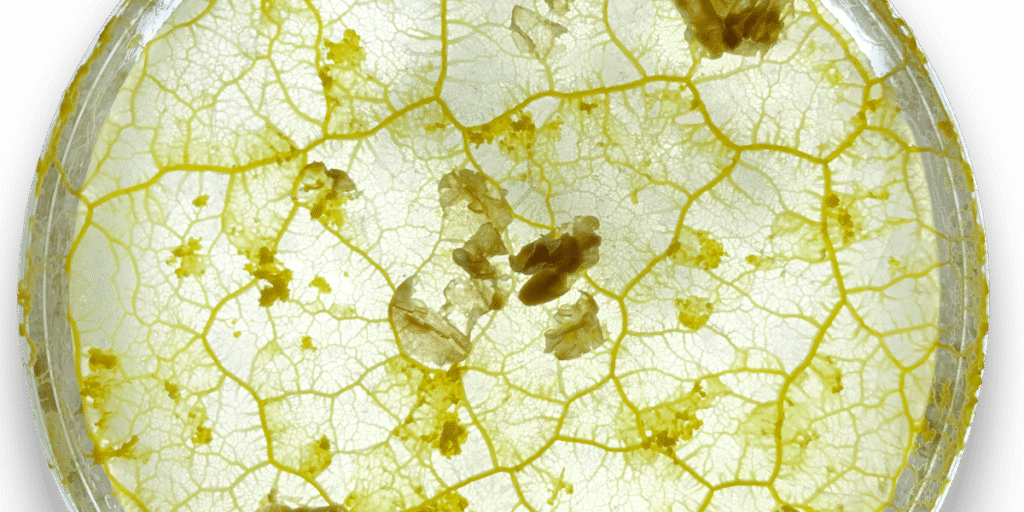
Physarum polycephalum, commonly known as slime mold, is a single-celled organism that predates dinosaurs and is classified neither as a plant, animal, nor fungus. When foraging for food, it extends tentacle-like structures in various directions, ultimately reinforcing the most efficient paths to food while discarding less productive ones. This behavior results in optimized networks that prioritize both efficiency and resilience, characteristics valued in transportation and infrastructure systems.
The organism’s capability to identify the shortest routes among numerous points, while retaining backup connections, has garnered interest from researchers focused on network design. A notable experiment conducted in 2010 by researchers at Hokkaido University involved placing slime mold on a map of Tokyo’s railway system, with major stations marked by oat flakes. Initially, the organism spread across the entire map, but over several days, it refined its pathways to align closely with Tokyo’s actual rail network.
Since that time, researchers in various countries, including Mexico and Great Britain, have explored using slime mold to address different maze-like challenges and even to study the structure of dark matter in the universe. However, the application of these experiments to real-world infrastructure remains limited.
Traditionally, studies involved printing physical maps and placing slime mold on them. Recently, a new approach by Kay and colleagues aims to replicate the pathway-building behavior of slime mold without using live specimens. The team observed the movement of slime mold in lab settings and developed an algorithm based on its behaviors.
Despite this progress, some experts, like Geoff Boeing from the University of Southern California, express skepticism about the efficacy of such algorithms. He argues that they may not adequately address the complex social dynamics involved in urban planning, emphasizing that the challenges are not solely technical but also political. This raises questions about the broader applicability of slime mold-inspired solutions in real-world scenarios.
Source: https://www.technologyreview.com/2025/10/17/1125223/slime-design-better-cities-mireta/