
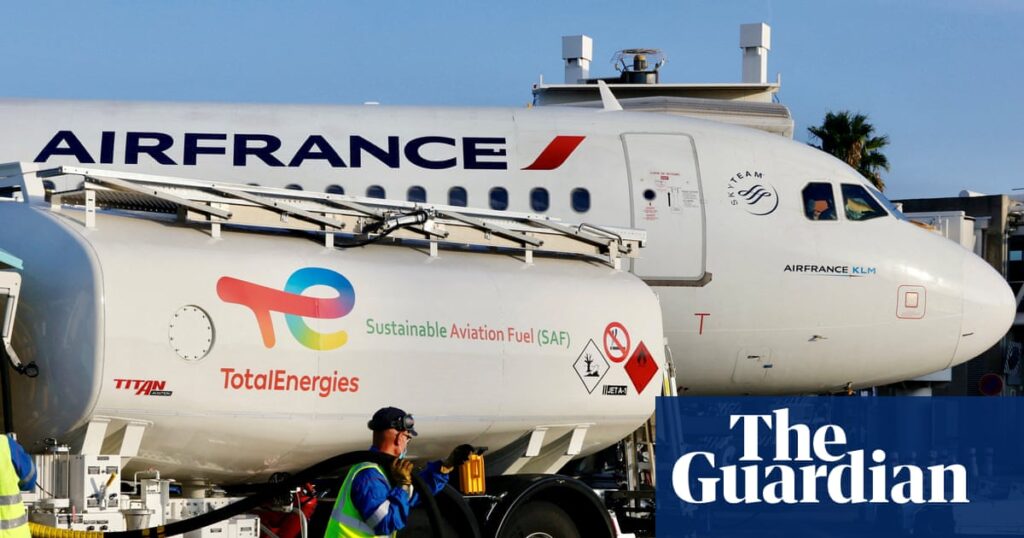
One hundred years ago, Italian aviator Francesco de Pinedo completed a pioneering flight across the Indian subcontinent, culminating in a landing on the Tiber River in Rome. His journey, which took seven months, included 80 water takeoffs and landings and marked a significant achievement in aviation history. Today, the aviation industry is confronted with a new challenge: achieving sustainability, particularly through the use of sustainable aviation fuels (SAF).
Currently, 70% of the identified emissions reductions necessary for carbon neutrality in aviation depend on SAF. Tim Alderslade from Airlines UK emphasized the importance of SAF in reaching net-zero emissions targets by 2050. In response to growing environmental concerns, the EU and UK have mandated that by 2030, 6% and 10% of jet fuel respectively must be sustainable.
However, airlines are expressing concerns regarding the availability and cost of SAF. A divide is emerging between airlines that have secured SAF sources and technology investments and those prioritizing cost efficiency. Ryanair’s CEO, Michael O’Leary, has dismissed SAF as unviable, while more moderate voices, like Willie Walsh from IATA, have acknowledged the slow progress in SAF production and questioned the feasibility of meeting mandated targets.
In the UK, momentum is building with initiatives aimed at stabilizing SAF prices to encourage investment. The government has allocated funds to support SAF production. Yet only one facility is currently producing SAF at scale, and several promised plants are delayed.
Moreover, industry experts warn that geopolitical factors and regulatory changes, particularly in the U.S., may impact SAF availability. Some believe that while SAF will eventually become commonplace, the transition period will be challenging and inconsistent.
Despite this uncertainty, there are developments in SAF technology. New companies are emerging with innovative processes, and established airlines are maintaining long-term commitments to SAF, though industry leaders indicate that significant investment is still needed.
Heathrow Airport claims to be leading in SAF usage, with plans to increase its share. Nonetheless, skepticism persists regarding the overall efficacy of SAF in mitigating aviation’s environmental impact, particularly as emissions will continue from aircraft engines. Critics caution that alternative uses for the feedstocks used in SAF might yield more immediate environmental benefits.
Source: https://www.theguardian.com/business/2025/oct/03/net-zero-aviation-sustainable-fuel-mandates-eu-uk