
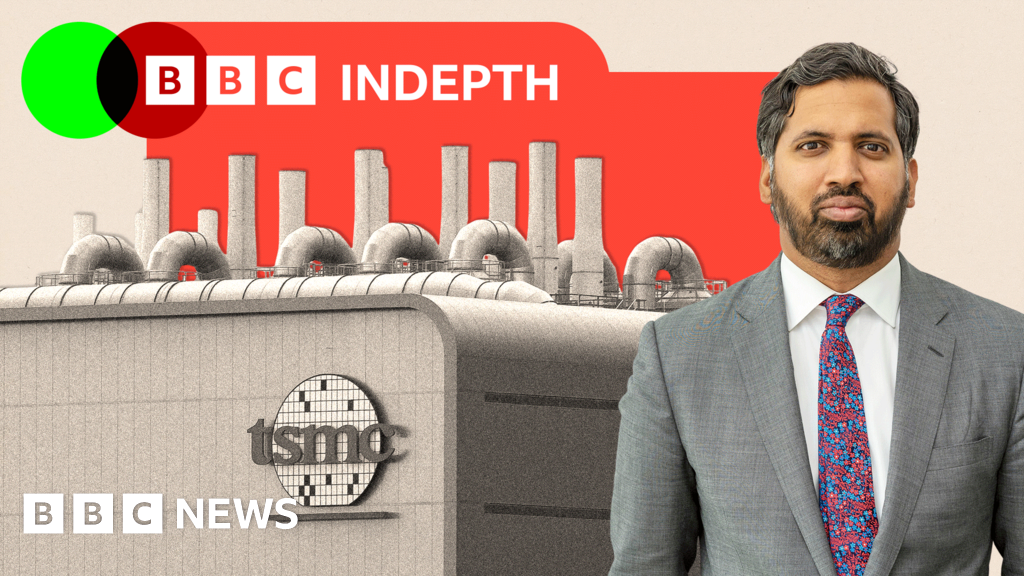
In the desert near Phoenix, Arizona, construction is underway on a significant semiconductor manufacturing facility by the Taiwan Semiconductor Manufacturing Company (TSMC). This facility, named Fab 21, aims to produce advanced chips, marking the first time such technology has been developed in the United States. TSMC’s investment is reported to be part of a larger strategy to mitigate potential tariffs on imported chips.
TSMC is responsible for the production of 90% of the world’s advanced semiconductors, which are integral to devices like smartphones and computers. Its Arizona facility is described as an essential site for future chip manufacturing, involving complex processes that safeguard proprietary designs for major clients like Apple and Nvidia. Entry to the facility is highly restricted to protect sensitive technologies involved in semiconductor fabrication.
Former President Trump has frequently cited TSMC’s expansion in the U.S. as a success of his administration’s policies, linking it to his threats of tariffs on Taiwanese imports. TSMC’s recent announcement to invest an additional $100 billion in the Arizona facility is seen as a response to shifting economic pressures, particularly amid global semiconductor challenges exacerbated by the COVID-19 pandemic.
China is monitoring these developments closely, as Taiwan’s semiconductor capabilities have been referred to as a “Silicon Shield” in the context of its geopolitical tensions with China. The complexities of semiconductor manufacturing require a global supply chain, involving materials and equipment from various countries.
The Arizona facility is designed to reflect the advanced facilities TSMC operates in Taiwan, featuring stringent cleanliness protocols to prevent contamination during chip production. Despite achieving significant advancements, there remains a cautious approach within Taiwanese authorities regarding the relocation of high-level technology outside Taiwan.
As the U.S. and Taiwan seek to maintain their technological edge over China, the geopolitical implications of this factory are extensive. The ongoing dialogue around semiconductors encapsulates both economic interests and national security considerations, underscoring the intricate relationship between technology and global politics.
Source: https://www.bbc.com/news/articles/cwywj0zgzwxo?at_medium=RSS&at_campaign=rss