
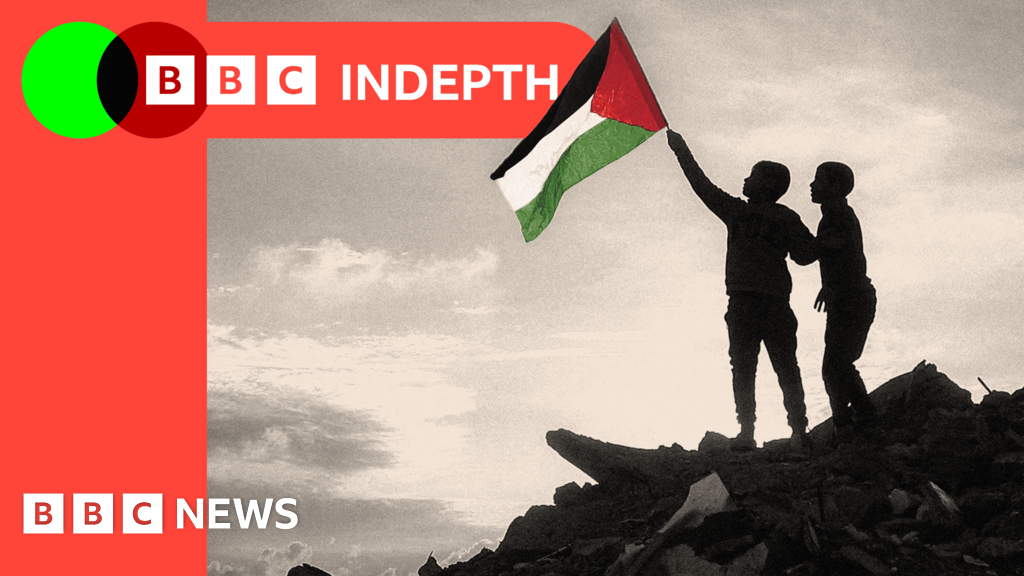
Earlier this month, Palestinian diplomat Husam Zomlot participated in a discussion at the Chatham House think tank in London. His attendance coincided with Belgium’s joining of other nations, such as the UK and France, in pledging recognition of a Palestinian state at the United Nations. Zomlot emphasized the importance of this moment, warning that upcoming events in New York might represent the last chance to implement a two-state solution.
Subsequent moves by traditional allies of Israel, including the UK, Canada, and Australia, have added momentum to these discussions. UK Opposition Leader Sir Keir Starmer announced the UK’s stance on social media, stating it aimed to keep alive the possibility of peace and the two-state solution, which he described as providing safety for Israel alongside a viable Palestinian state. Over 150 countries have already recognized Palestine, and the recognition from additional nations is viewed as a substantial development.
Despite this, significant questions remain regarding the definition and existence of a Palestinian state. According to the Montevideo Convention, a state must have a permanent population, a defined territory, and a capacity for international relations, as well as a functioning government. While Palestinians can claim to meet two criteria—permanent population and international relations, as exemplified by Zomlot—they lack a defined territory or a stable government.
The geographical separation between the West Bank and Gaza, intensified by military occupation and settlement expansions, complicates the notion of Palestinian statehood. The Palestinian Authority administers limited areas in the West Bank, while the governance of Gaza is wholly under Hamas. This longstanding political division results in significant challenges, including a lack of leadership and a sense of cynicism among Palestinians regarding their political future.
Current political dynamics further complicate prospects for recognition and statehood. With leadership issues and internal discord persisting, calls for elections have intensified, yet they remain unaddressed. Palestinian leaders and scholars alike recognize the need for new leadership to navigate the complex landscape of Palestinian politics, but significant barriers still exist.
As international recognition grows, the ultimate question remains: what tangible steps can be taken toward progress, and how can the international community serve to mitigate ongoing violence rather than merely recognize statehood?
Source: https://www.bbc.com/news/articles/c930dlxnee4o?at_medium=RSS&at_campaign=rss