
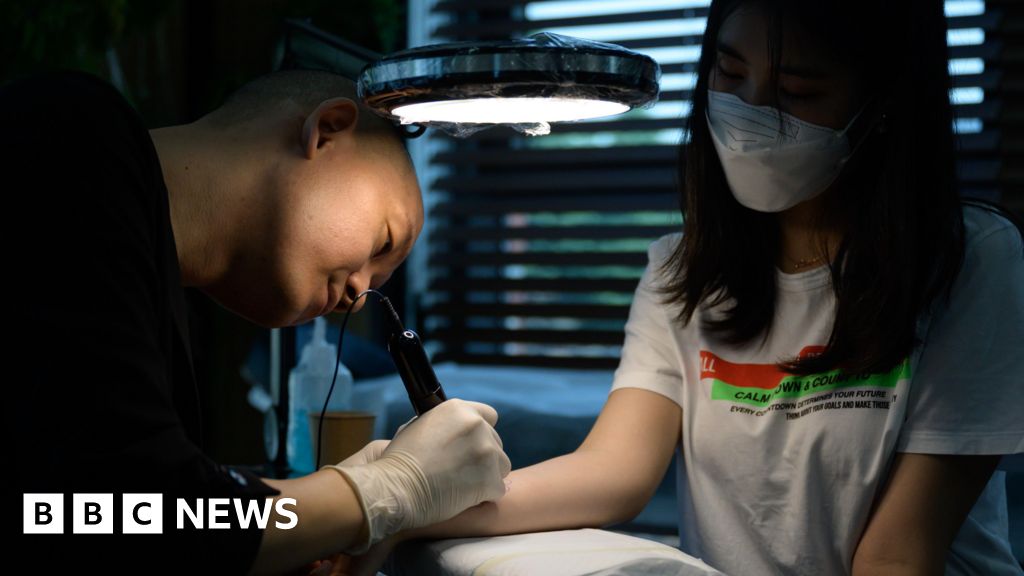
South Korea has recently enacted legislation that allows non-medical professionals to legally practice tattoo artistry for the first time in over 30 years. This development follows a lengthy campaign by tattoo artists seeking to operate without the fear of prosecution or harassment, as previously dictated by a 1992 Supreme Court ruling that restricted tattooing to those with medical credentials.
The recently approved Tattooist Act enables non-medical professionals—the majority of those in the industry—to obtain a license for tattooing. Prior to this law, individuals offering tattoos without Medical credentials faced severe penalties, including up to five years in prison or fines reaching 50 million Korean won (approximately $35,000 or £28,000). Though precise statistics on prosecutions are lacking, the South Korea Tattoo Union reports providing legal support to around 50 artists annually, highlighting a significant number of undocumented cases.
Estimates suggest that there were about 350,000 tattoo artists in South Korea as of 2021, with most specializing in semi-permanent makeup. Few of these artists possess medical qualifications; many come from backgrounds in art or beauty. The legal ambiguities surrounding tattooing had subjected artists to various forms of harassment, discouraging them from reporting incidents due to the risk of facing legal repercussions.
Recent shifts in attitude towards tattooing have been reflected in court decisions that have acquitted several artists. Legislative support for the new law was expressed by Park Ju-min, chairman of the National Assembly’s health and welfare committee, who emphasized the importance of ensuring safe tattooing practices and recognizing tattoo artists as legal professionals.
Nonetheless, the new law faces opposition from the medical community, which argues that tattooing can pose health risks and should be considered a medical procedure. There remains a societal stigma surrounding tattoos in South Korea, with recent polls indicating that a majority of the population still views them negatively.
The provisions of the Tattooist Act will come into effect in two years, requiring tattoo artists to pass a national exam, undergo safety and hygiene training, and maintain detailed records. However, the authority to perform tattoo removals, which involve laser procedures, will continue to be limited to medical professionals.
Source: https://www.bbc.com/news/articles/cp8jz0vrrp4o?at_medium=RSS&at_campaign=rss