
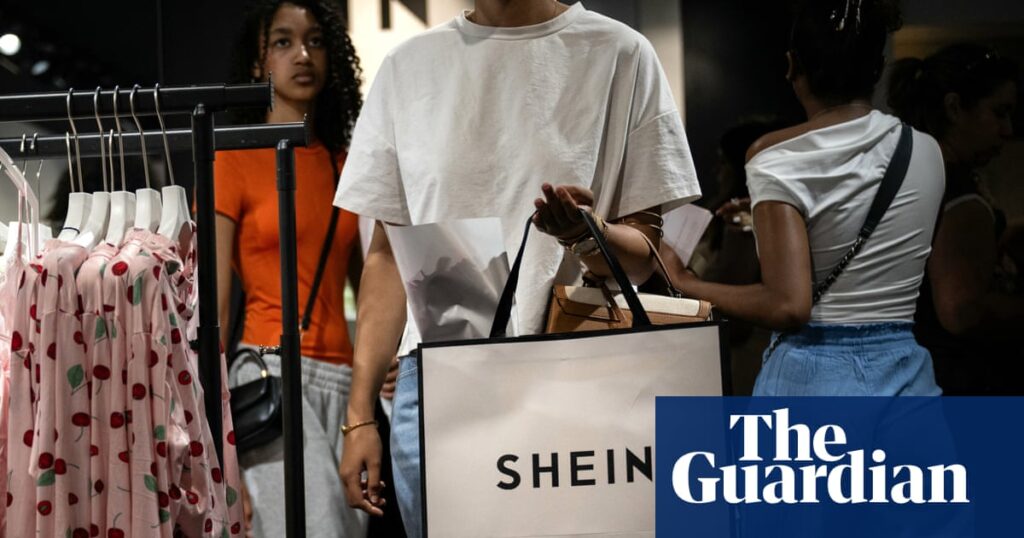
Shein’s UK subsidiary has been accused of transferring a significant portion of its income to its Singapore-based parent company in order to reduce its tax liabilities in the UK. The fashion retailer generated £2 billion in sales last year, yet paid only £9.6 million in corporation tax, which corresponds to 25% of the £38.2 million in pre-tax profits reported for 2024. Critics have pointed out that approximately 84%, or £1.72 billion, of these sales are categorized as “purchasing” costs and reallocated to Roadget Business Pte Ltd in Singapore.
Paul Monaghan, CEO of the Fair Tax Foundation, highlighted concerns regarding the overall tax contributions of Shein in the UK, questioning the amount of profit actually recorded there. He noted that the transactions between the UK and Singapore create a scenario where minimal surplus remains to be taxed in the UK. His remarks drew parallels to practices observed in large tech companies known for employing similar tax strategies.
Shein has stated that its UK operations engage in purchasing practices that adhere to market principles, asserting compliance with applicable laws and regulations in each market it operates. The company emphasized that it operates on low margins in a high-volume industry.
Additionally, the ownership structure of Shein’s Singapore operations ultimately links back to the Cayman Islands, noted as a tax haven. Questions have arisen regarding the effective corporation tax rate for the Singapore entity, which averaged 9.4% from 2021 to the end of 2023, according to Monaghan’s findings.
Beyond tax strategies, concerns about Shein’s financial practices extend to its use of the de minimis rule, allowing low-value goods to enter the UK without customs duty. Estimates suggest the company could have faced up to £200 million in customs duties had it not utilized this exemption. As global scrutiny increases, including a review by UK Chancellor Rachel Reeves of such tax exemptions, Shein’s practices could face additional regulatory challenges. Reports indicate that a significant proportion of low-value parcels arriving in the UK are from China, underscoring the increasing complexity of international commerce regulation.
Source: https://www.theguardian.com/business/2025/sep/06/shein-uk-singapore-tax-fashion