
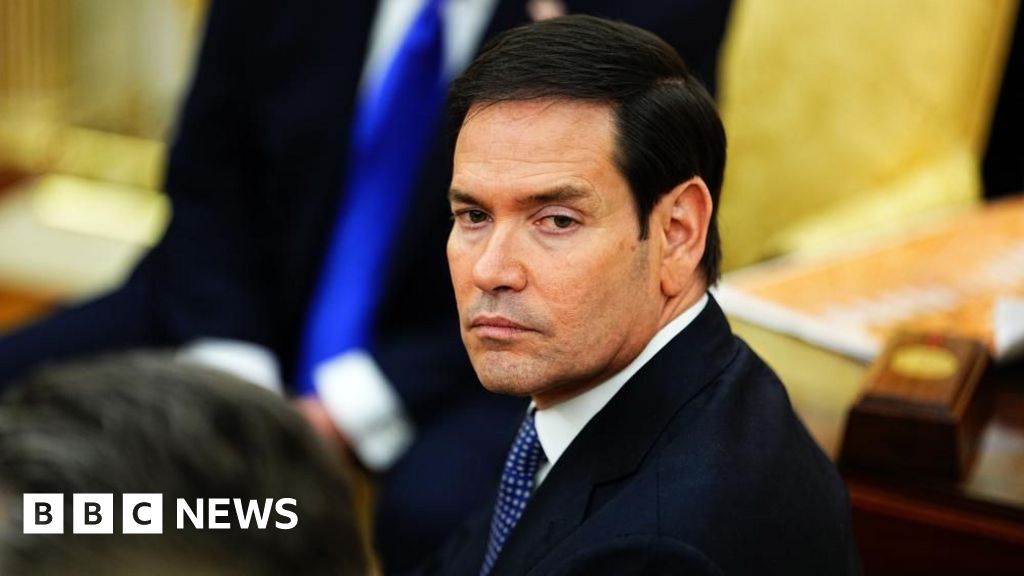
The U.S. Secretary of State has stated that a recent move by Israel’s parliament to consider annexing parts of the occupied West Bank could jeopardize American efforts to resolve the ongoing conflict in Gaza. Marco Rubio expressed concerns about the potential implications for U.S. support during his visit to Israel, aimed at reinforcing a fragile ceasefire.
This parliamentary action, which received preliminary approval, has drawn attention for being orchestrated by far-right politicians with the intention of placing pressure on Israel’s Prime Minister Benjamin Netanyahu. Israel has occupied the West Bank, which the Palestinians envision as part of a future independent state, since 1967. The International Court of Justice previously ruled that Israel’s occupation is illegal, further complicating the situation.
Netanyahu has shown prior support for annexation but has refrained from pursuing it due to the significant risk of alienating the U.S. and Arab nations that have recently established ties with Israel. Ultra-nationalists in his coalition have often advocated for annexation, yet the latest bill was introduced by members from outside the government.
The bill passed narrowly with a vote of 25-24, raising questions about its overall support within the Knesset, Israel’s parliament, which comprises 120 seats. The Palestinian foreign ministry condemned the Knesset’s action, asserting that Israel could not claim sovereignty over Palestinian land.
In the West Bank, Israel has built approximately 160 settlements housing around 700,000 individuals, alongside an estimated 3.3 million Palestinians. These settlements are deemed illegal under international law, a position reinforced by the International Court of Justice.
During his trip, Rubio noted that annexation would be detrimental to peace efforts, aligning with U.S. opposition to such moves. His visit closely follows trips by other U.S. officials as the Trump administration seeks to initiate discussions on a peace process. The first phase of the peace plan has recently been implemented, which includes a ceasefire and partial withdrawal of Israeli forces, although both sides have accused each other of violating the agreement.
The current conflict, which erupted following a Hamas-led attack on Israel on October 7, 2023, has resulted in significant casualties on both sides, with thousands reported killed in Gaza. The peace plan’s second phase proposes establishing a temporary government in Gaza, the withdrawal of Israeli troops, and the disarmament of Hamas.
Source: https://www.bbc.com/news/articles/cn8xvj108z9o?at_medium=RSS&at_campaign=rss