
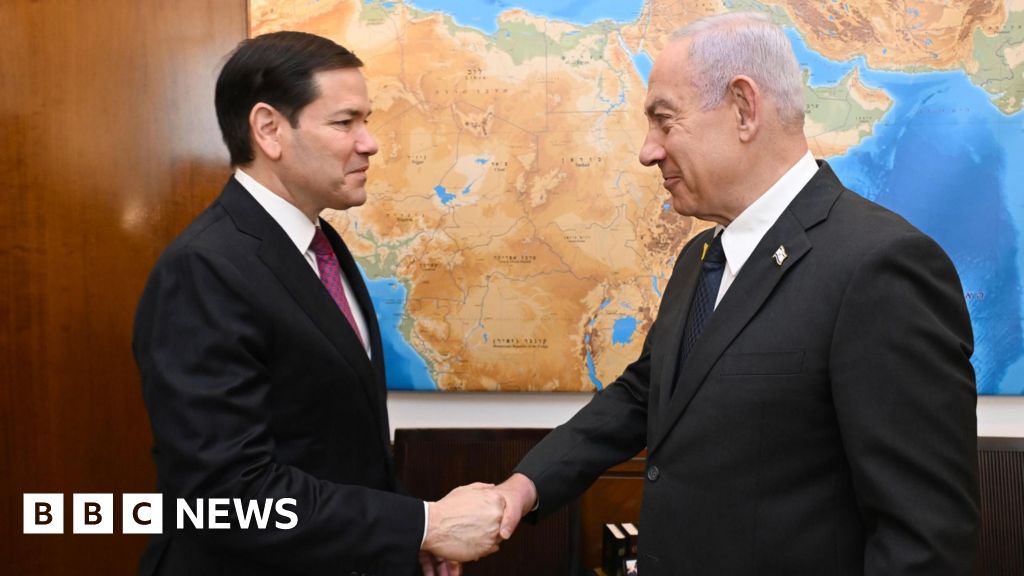
US Secretary of State Marco Rubio is currently meeting with Israeli Prime Minister Benjamin Netanyahu in Jerusalem, where the discussions are expected to focus on the recent Israeli airstrike in Qatar. This strike targeted senior Hamas leaders and has elicited significant international criticism, including discontent from President Donald Trump.
Rubio stated, “Obviously we’re not happy about it. The president was not happy about it. Now we need to move forward and figure out what comes next.” This meeting coincides with an Arab leaders’ summit expressing support for Qatar, where its prime minister called on the international community to address perceived double standards regarding Israel.
Qatar hosts a major US airbase and has been instrumental in mediating indirect negotiations between Hamas and Israel regarding the ongoing conflict in Gaza. During their visit, Netanyahu emphasized the strength of US-Israel relations, describing them as “durable as the stones in the Western Wall.” Rubio participated in a traditional ritual at this site, placing a note in the wall.
The agenda for Netanyahu and Rubio will also likely include Israeli military strategies in Gaza, including plans to take control of Gaza City and the ongoing expansion of Israeli settlements in the West Bank. Recently, the Israeli military has intensified operations in Gaza, prompting mass evacuations. The Israel Defense Forces estimate that around 250,000 Palestinians have fled, although many remain, citing safety concerns and the inability to afford relocation.
The upcoming UN General Assembly session may see several US allies recognize the State of Palestine, intensifying discussions within Israel regarding West Bank policy, including potential annexation of territories. The Israeli government recently approved the E1 settlement project, which could significantly alter the landscape of Palestinian territories.
Later this week, Rubio will visit the City of David archaeological park in East Jerusalem, where he will attend the inauguration of a tunnel known as the “Pilgrimage Road.” This site has been viewed by some as a politicization of archaeological efforts in the region.
Source: https://www.bbc.com/news/articles/czxw4xkxg51o?at_medium=RSS&at_campaign=rss