
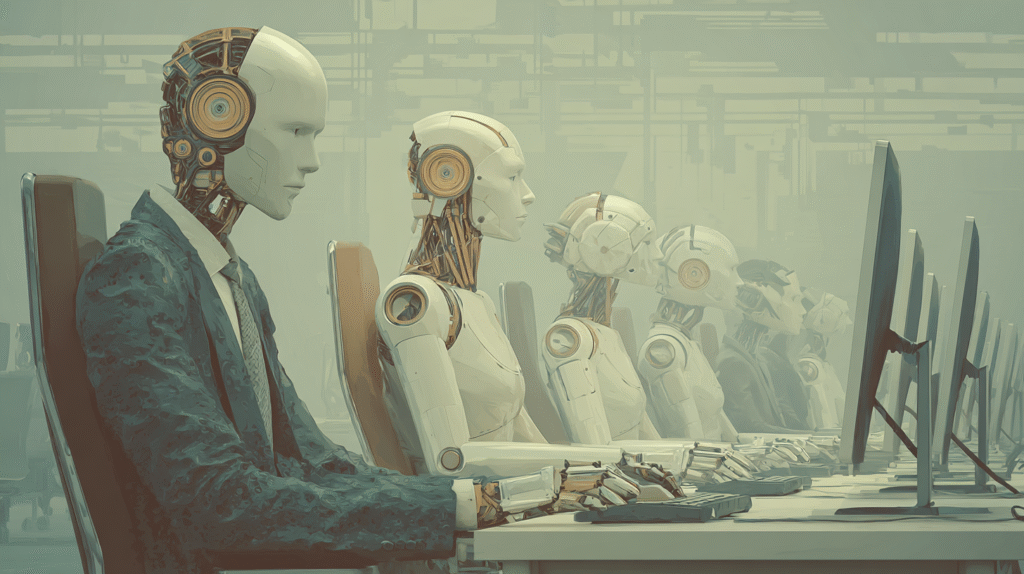
AI technology is increasingly being promoted as a solution for automating numerous tasks, including customer service and software development. This has led to expectations that AI could significantly reduce the need for human workers. However, there are concerns that these expectations may not align with the current capabilities of AI.
A technologist with experience in optimizing AI for major organizations, including General Electric and Harvard Medical School, emphasizes that fully replacing human workers with AI in most roles remains a distant prospect. Despite a notable reduction in programming jobs recently, high-profile figures in the tech industry, such as Bill Gates and Sam Altman, have cautioned against the complete replacement of programmers with AI tools.
AI models currently rely on large datasets, primarily comprising publicly available or proprietary data. While AI can handle straightforward tasks like basic website creation, more complex and proprietary coding remains a challenge. The specialized programming that drives major tech companies is often confined within those organizations and is typically crafted by experienced engineers.
Presently, AI lacks the ability to reason independently or possess instincts. It operates primarily through pattern recognition. For instance, while AI can improve efficiency in basic coding tasks, it often requires extensive review for more complicated projects, sometimes making the process more time-consuming than working without AI assistance.
Despite these limitations, the integration of AI into the workplace is seen as beneficial. There is, however, a consensus that the idea of replacing entire teams with AI is premature. Senior professionals will continue to be essential for managing complex work, and training for junior positions is necessary to prepare for more advanced roles.
To maximize the benefits of AI, the focus should shift from attempting to replace human workers to enhancing their capabilities.
Source: https://venturebeat.com/ai/replacing-coders-with-ai-why-bill-gates-sam-altman-and-experience-say-you