
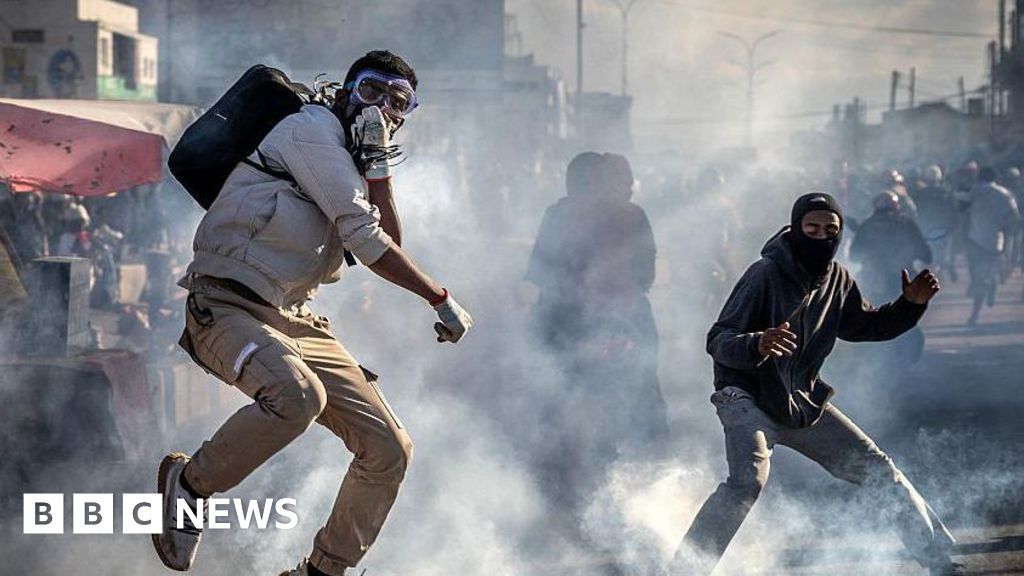
President Andry Rajoelina of Madagascar has appointed Army General Ruphin Fortunat Zafisambo as the new Prime Minister in response to ongoing youth-led protests against his administration. Rajoelina stated that the country requires a leader “capable of restoring order and the people’s trust.” This appointment follows the President’s expressed concerns about a potential coup attempt, highlighting a significant shift towards military involvement in the government.
The protest movement, known as Gen Z Mada, has rejected the new Prime Minister’s appointment and issued an ultimatum for Rajoelina to resign within 48 hours, asserting that their struggle will persist as long as he remains in power. The protests, initiated on September 25, were sparked by frustrations over frequent water and power outages and have escalated into broader concerns about corruption and high unemployment.
Rajoelina had dismissed the previous Prime Minister, Christian Ntsay, and his entire cabinet days before this appointment, aiming to alleviate public discontent. In announcing Gen Zafisambo’s role, Rajoelina emphasized the need for a “clean” leader ready to “save Madagascar.” Prior to this, Zafisambo was serving as the director of the military cabinet in the Prime Minister’s office.
The United Nations reported last week that at least 22 people have died and over 100 have been injured in the protests, a figure the government has contested, labeling it as “rumours and misinformation.” Security forces clashed with demonstrators in Antananarivo and other cities as unrest intensified, resulting in injuries among protesters, including one individual who was hospitalized following confrontations with law enforcement.
Madagascar, which gained independence in 1960, has experienced numerous uprisings, including major protests in 2009 that led to Rajoelina’s first rise to power. The current protests have become a significant challenge for Rajoelina since his re-election in 2023. Despite having abundant natural resources, Madagascar is one of the world’s poorest nations, with approximately 75% of its population living below the poverty line and only about one-third of its 30 million residents having access to electricity.
Source: https://www.bbc.com/news/articles/c20z7e2pyw5o?at_medium=RSS&at_campaign=rss