
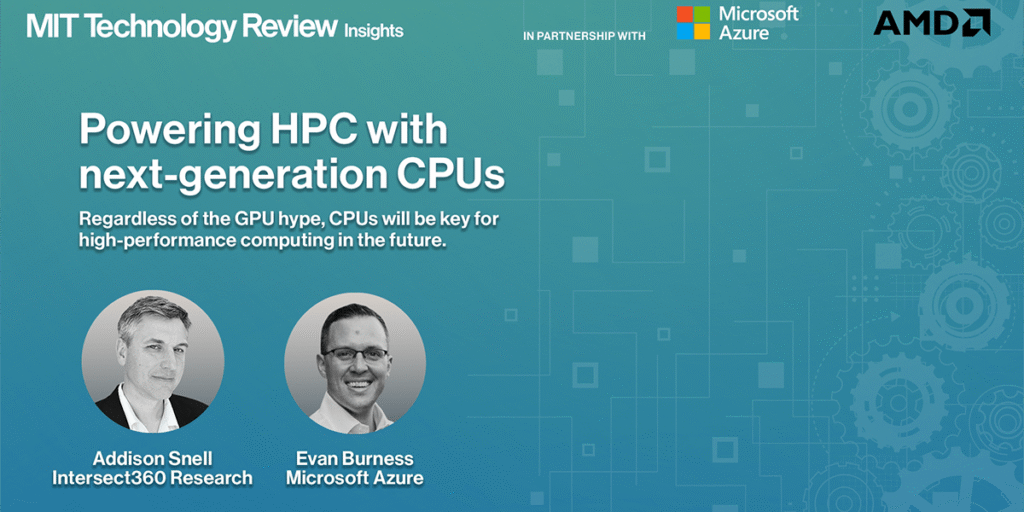
CPUs have demonstrated endurance in the computing landscape due to their flexibility, compatibility, and cost efficiency. According to Evan Burness from Microsoft Azure, CPUs are a reliable technology that typically supports software continuity across different generations with minimal disruption. This aspect is particularly beneficial for businesses and researchers who require consistent results rather than merely high processing power.
Technological advancements are also evolving the capabilities of CPUs. Innovations such as chiplet designs, on-package memory, and hybrid CPU-GPU architectures are pushing performance beyond the traditional limits associated with Moore’s Law. For many organizations, CPUs represent a strategic choice that effectively balances speed, efficiency, and cost.
Looking toward the future, the interplay between CPUs, GPUs, and specialized processors like NPUs will significantly influence high-performance computing (HPC). This is not viewed as a competition among these technologies but rather an assessment of their design suitability for specific purposes. As Addison Snell, co-founder and CEO of Intersect360 Research, indicates, the demand for solutions to increasingly complex problems in science and industry continues to grow.
Thus, CPUs are expected to maintain a central role in the computing ecosystem for the foreseeable future. For more insights on this topic, a new report titled “Designing CPUs for Next-Generation Supercomputing” is available for further reading.
This content has been produced by Insights, the custom content division of MIT Technology Review, and was developed by a team of human writers, editors, and analysts. AI tools utilized in the process were primarily for secondary production and were subject to human review.
Source: https://www.technologyreview.com/2025/09/30/1124493/powering-hpc-with-next-generation-cpus/