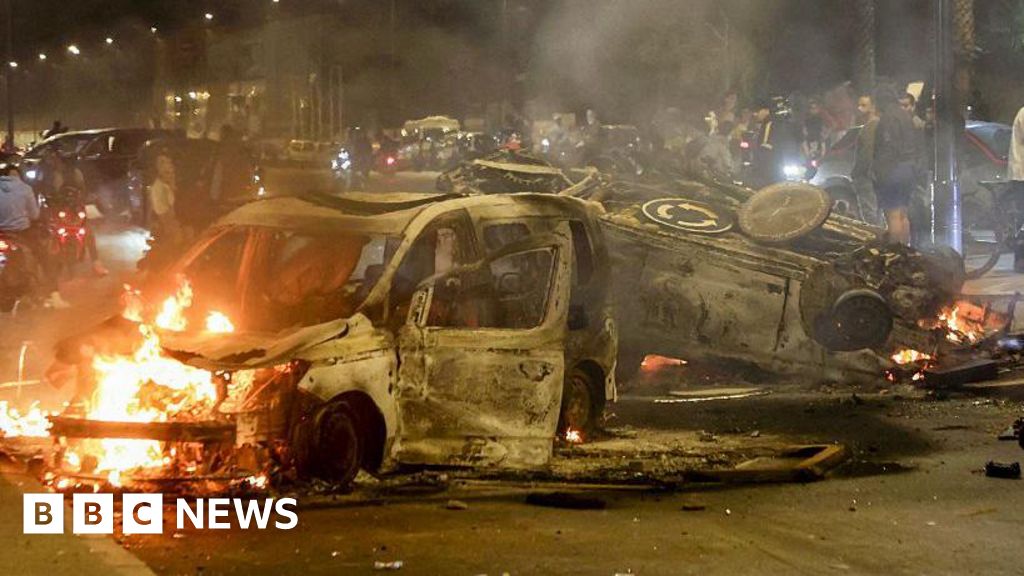
At least two fatalities have been reported in Morocco following police gunfire aimed at preventing protesters from storming a police station in Lqliaa, situated near Agadir, as confirmed by state media. This marks the first instance of fatality since large-scale demonstrations, primarily led by youth, commenced on Saturday. The protests were ignited by dissatisfaction over the government’s decision to focus on constructing football stadiums for the 2030 FIFA World Cup instead of enhancing public services and addressing ongoing economic issues.
Protest chants among the youth highlight concerns for healthcare, as exemplified by one protester’s comments regarding his hospital experience in Oujda, which he likened to a jail due to unsanitary conditions and the necessity of bribing staff for medical attention. The protests have mainly occurred at night, with police claiming they acted in self-defense during a disturbance on Wednesday evening.
The interior ministry announced earlier that citizens’ right to protest would be upheld as long as it remains lawful. The organizers of the youth-led movement, identified as GenZ 212, which references Morocco’s international dialing code, have clarified that they do not condone violence and primarily mobilize through social media without a centralized leadership.
Current statistics indicate that Morocco’s unemployment rate stands at 12.8%, with youth unemployment reaching 35.8%, and 19% among graduates. Protests have emerged in several key cities, including Rabat, Casablanca, and Tangier, while reports from local media also pointed to unrest in Marrakech, where a police station was set ablaze.
The interior ministry’s representative reported that 409 individuals have been detained during the protests, with injuries reported among over 260 police officers and 20 demonstrators. Damage includes the burning of 40 police vehicles and 20 private cars. The recent unrest in Morocco parallels similar youth-led demonstrations in other countries, including Nepal, Indonesia, the Philippines, and Madagascar. In response, Morocco’s governing coalition expressed a readiness to engage in dialogue with the youth to seek realistic solutions.
Source: https://www.bbc.com/news/articles/cgrqpekyxpvo?at_medium=RSS&at_campaign=rss