
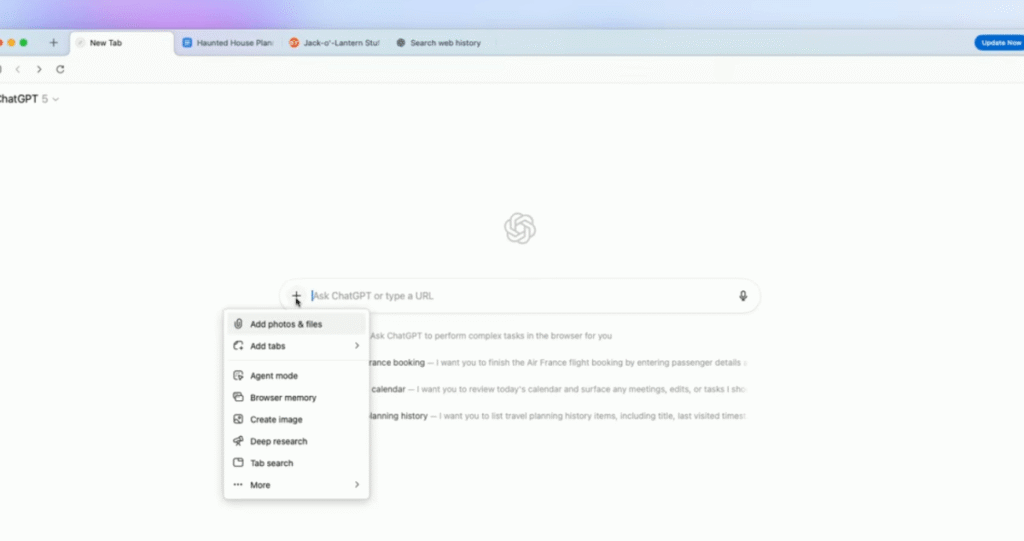
OpenAI has launched a new AI-driven web browser named ChatGPT Atlas, which was announced during a livestream event. The browser is currently available for macOS users globally, with future availability planned for Windows, iOS, and Android devices. During the event, OpenAI CEO Sam Altman discussed the vision for integrating chat experiences into web browsing.
The livestream featured several OpenAI team members, including Will Ellsworth, Adam Fry, Ben Goodger, Ryan O’Rouke, Justin Rushing, and Pranav Vishnu. Fry highlighted the browser’s key features, such as memory capabilities that aim to offer personalized assistance and an agent mode. In this mode, ChatGPT can potentially perform tasks like making reservations or editing documents on behalf of users.
When a user clicks on a link in Atlas, the browser displays a split-screen by default, showing both the webpage and a ChatGPT transcript for continuous interaction. Users have the option to disable this feature if they prefer a traditional browsing experience. Additional features demonstrated included summarizing web pages and a function called “cursor chat,” which allows users to tidy up text in emails directly within the browser.
The development of AI-powered browsers is gaining momentum, with other companies also introducing similar technologies. For instance, earlier this year, Perplexity released its Comet browser, which focuses on providing concise answers to queries and managing users’ online tasks. Google has also announced plans to incorporate its Gemini AI assistant more deeply into Chrome, enabling it to perform routine tasks such as scheduling and shopping.
The ongoing competition in AI-enhanced browsing tools raises questions about the future of web navigation and user interaction.
Source: https://www.theverge.com/ai-artificial-intelligence/803475/openais-ai-powered-browser-chatgpt-atlas-google-chrome-competition-agent