
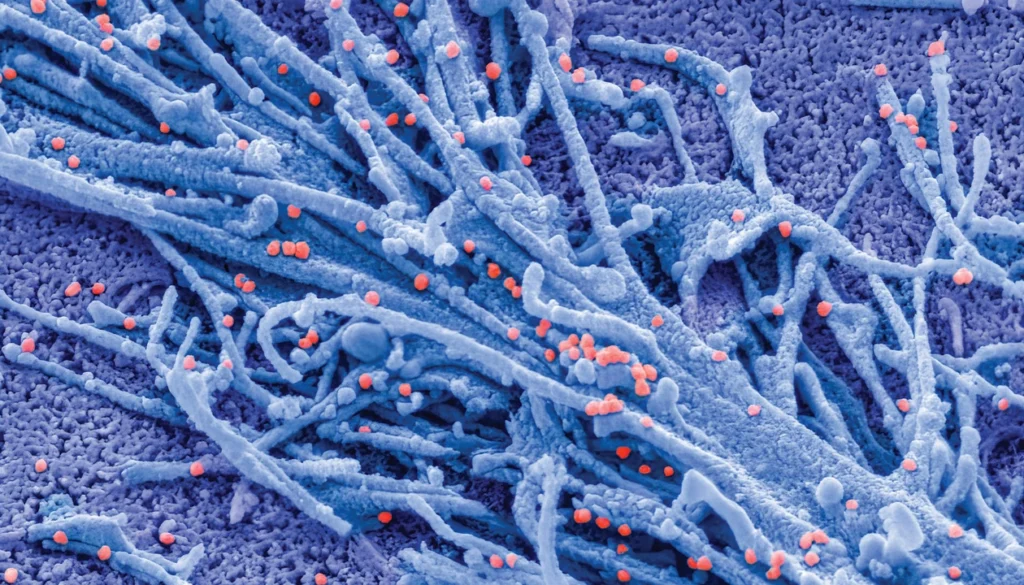
Researchers at the Advanced Science Research Center at CUNY Graduate Center have developed a broad-spectrum antiviral that targets N-glycans, which are commonly found on proteins and involved in various biological functions. Their study, published in *Science Advances*, explores this novel approach to combat viral infections. Initially aimed at creating inhibitors for diseases like cancer, the researchers discovered that viruses utilize these sugars to attach to host cells. Their method challenges traditional binding principles by utilizing flexible synthetic carbohydrate receptors (SCRs) that can adapt their shapes to better interact with specific sugars, a concept not typically explored in glycan drug development.
In testing, two of the synthesized compounds, SCR005 and SCR007, were effective against six types of replication-defective enveloped viruses and a non-enveloped rotavirus. In murine models, these compounds showed no toxicity even at high doses and significantly reduced mortality and severity of infection in mice infected with SARS-CoV-2. The team observed that SCR007 selectively binds fucosylated N-glycans commonly present in viruses. Further research is planned to assess the implications of these compounds on cellular functions and to minimize potential resistance mechanisms.
The team is preparing for Phase 1 clinical trials and aims to explore SCRs for potential treatments of other conditions, including cancer.
- Why it matters: This research could lead to a new class of antiviral drugs, offering effective treatments for various viral infections, which is especially crucial in light of recent pandemic experiences.
- This may also pave the way for therapies targeting other diseases like cancer, improving treatment options.
- The latest: Researchers are preparing to initiate Phase 1 clinical trials for these compounds.
Source: https://cen.acs.org/pharmaceuticals/drug-discovery/New-broad-spectrum-antiviral-compounds/103/web/2025/08
Source: https://cen.acs.org/pharmaceuticals/drug-discovery/New-broad-spectrum-antiviral-compounds/103/web/2025/08