
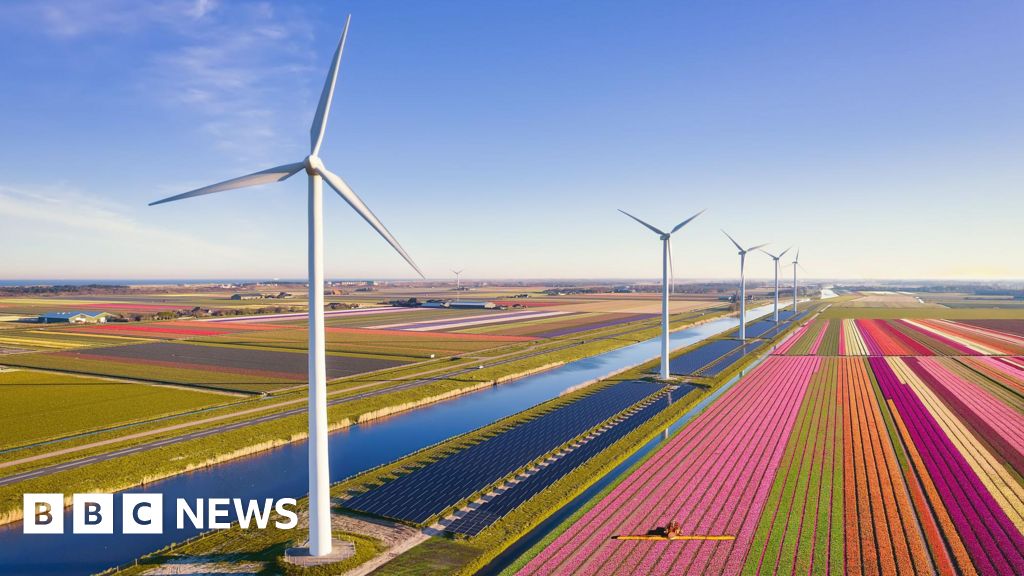
In the Netherlands, the government’s campaign “Flip the Switch” aims to reduce electricity consumption during peak hours by advising viewers to limit usage between 4 PM and 9 PM. This effort highlights challenges within a nation recognized for its advanced economy and strong renewable energy efforts. While the country leads Europe in electric vehicle charging points per capita, it is also grappling with grid congestion due to the increasing reliance on wind and solar power, replacing natural gas previously sourced from the North Sea.
Over one-third of Dutch homes are equipped with solar panels, and future goals include offshore wind farms becoming the primary energy source by 2030. However, this rapid transition has placed significant stress on the national electricity grid, leading to frequent power outages. Kees-Jan Rameau, CEO of Eneco, describes grid congestion as akin to traffic jams, stemming from a mismatch between energy supply and demand on a grid that was originally designed for fewer, large power plants.
Experts like Damien Ernst from Belgium’s Liege University label the situation as a grid crisis, rooted in insufficient investment in distribution networks. With approximately 8,000 companies waiting to connect to the grid or increase their electricity usage, the situation poses a risk to economic growth in sectors such as chemicals.
The government-owned agency Tennet is planning a €200 billion investment to upgrade the grid, which is expected to take years due to lengthy legislative processes. Measures are being introduced, including adjustments to regulations for quicker permits and maximizing existing grid capacity through initiatives like the “Flip the Switch” campaign. Additionally, financial incentives for consumers to supply solar power to the grid are being significantly reduced, raising questions about the future of renewable energy contributions in the Netherlands.
Source: https://www.bbc.com/news/articles/cn40y9yxkgvo?at_medium=RSS&at_campaign=rss