
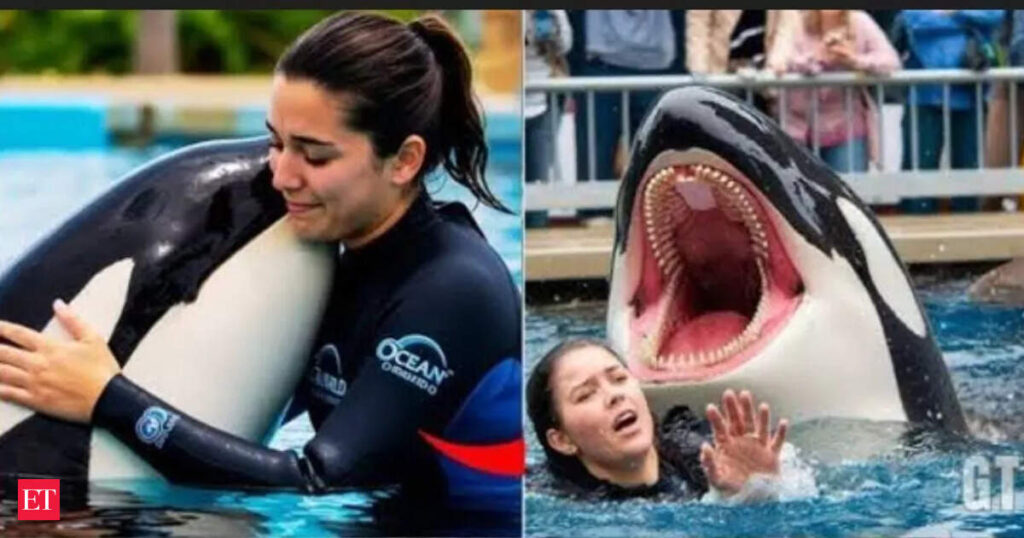
The latest clip, which depicts a whale attacking a woman in a pool while audience members flee, has been shared with commentary describing it as “the terrifying last moments” of Lysaro. It encourages viewers to comment “Rest in Peace” and suggests that wild animals should remain in their natural habitats.
Mixed reactions have emerged from viewers, with some believing the video to be authentic, while others have pointed out signs of AI editing, including unnatural movements and distorted backgrounds. Investigations have shown no verification of Marina Lysaro’s existence, similar to the earlier claims about Radcliffe, reinforcing the notion that these characters are fictional.
The dissemination of these deepfake videos raises concerns about misinformation on social media platforms, highlighting the need for careful verification of content before sharing.
- Why it matters:
- The rapid spread of misinformation can shape public perception about marine parks and animal safety.
- Raising awareness about AI-generated content can help prevent confusion and protect audiences from misleading information.
- The latest:
- There are no credible reports confirming the incidents involving either Marina Lysaro or Jessica Radcliffe.
Source: https://m.economictimes.com/news/international/us/orca-attack-viral-video-who-is-marina-lysaro-all-details-orca-trainer-ai-generated-clip-social-media-users-killer-whale-performance-evidence-jessica-radcliffe-pacific-blue-marine-park-official-report/articleshow/123266553.cms
Source: https://m.economictimes.com/news/international/us/orca-attack-viral-video-who-is-marina-lysaro-all-details-orca-trainer-ai-generated-clip-social-media-users-killer-whale-performance-evidence-jessica-radcliffe-pacific-blue-marine-park-official-report/articleshow/123266553.cms