
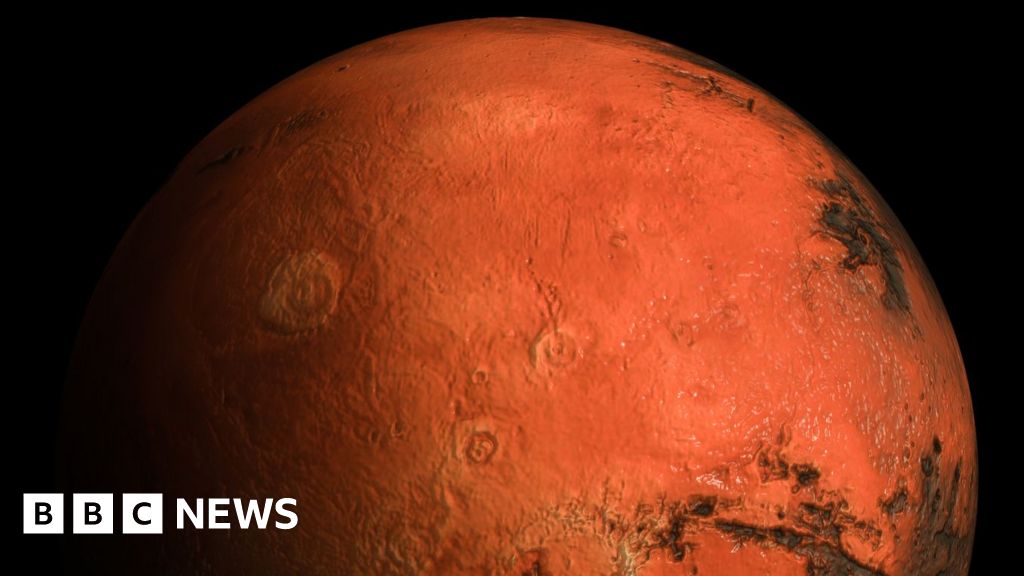
Scientists have reportedly recorded electrical activity in the Martian atmosphere for the first time, indicating that Mars may be capable of producing lightning. NASA’s Perseverance rover, which landed on Mars in 2021, has been exploring the Jezero Crater region for the past four years in search of signs of past life.
The rover’s SuperCam instrument captured audio and electromagnetic signals, identifying electrical discharges informally referred to as “mini lightning.” A team of researchers from France analyzed 28 hours of recordings gathered over two Martian years, or 1,374 Earth days. They noted that these discharges are typically linked to dust devils and storm fronts. Dust devils, small whirlwinds formed by hot air rising from the Martian surface, can generate electrical activity within their internal movements.
Lead researcher Dr. Baptiste Chide emphasized that these findings could have significant implications for Martian atmospheric chemistry, climate, and habitability, as well as future robotic and human exploration. The team believes that Mars may now be grouped with Earth, Saturn, and Jupiter as planets known to exhibit atmospheric electrical phenomena.
However, some experts approach these findings with caution. Particle physicist Dr. Daniel Pritchard pointed out in the journal Nature that while the recordings present compelling evidence of dust-induced discharges, the absence of visual confirmation may leave room for skepticism about the nature of these electrical events.
In a related discovery, scientists previously identified rocks on Mars featuring unusual markings, known as “leopard spots” and “poppy seeds.” These formations contain minerals that could be linked to ancient microbial life, although they may also result from natural geological processes.
Mars, currently a cold and dry desert, was once characterized by a thicker atmosphere and liquid water, making it a focal point for investigations into past life. The Jezero Crater was selected for exploration due to its historical significance, as it was once a delta capable of supporting liquid water.
Source: https://www.bbc.com/news/articles/c0q5w13e58zo?at_medium=RSS&at_campaign=rss