
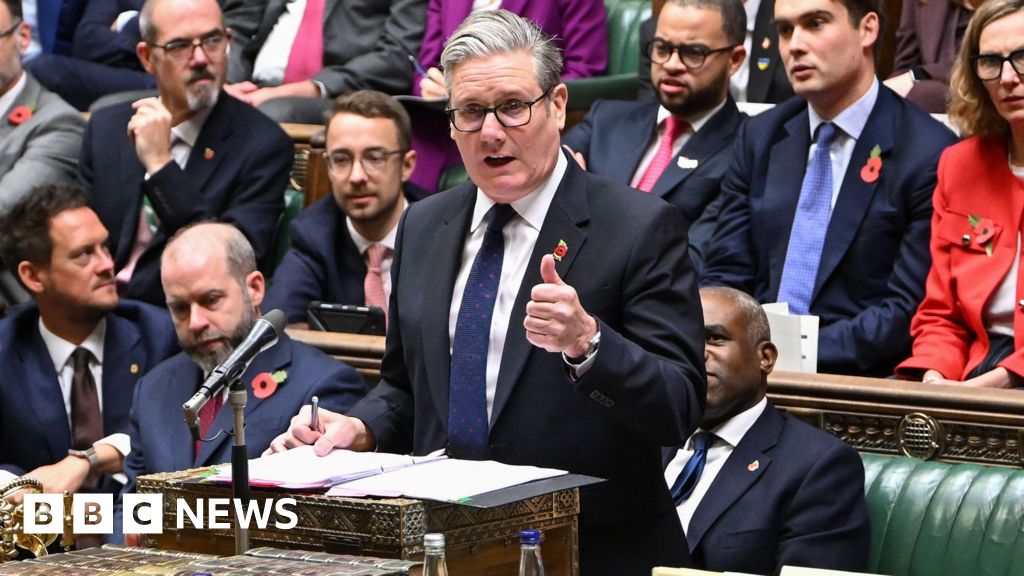
Prime Minister Keir Starmer has not affirmed his party’s commitment to refrain from increasing major taxes in the upcoming Budget. During a recent session of Prime Minister’s Questions, Starmer did not reiterate Labour’s pledge not to raise income tax rates, VAT, or National Insurance. This lack of commitment has prompted Conservative leader Kemi Badenoch to suggest that tax increases may be imminent and criticized Labour’s ability to manage public spending.
This situation arises amid speculation that Chancellor Rachel Reeves may break Labour’s manifesto commitments to raise necessary funds to address a projected Budget deficit. It is anticipated that Reeves will propose tax increases in the Budget scheduled for November 26, particularly after recent economic forecasts have tempered expectations and additional welfare cuts proved divisive.
Historically, Starmer maintained that he would uphold these tax promises; he had stated “yes” when previously asked about potential tax increases. However, his recent comments suggest a shift in approach, as he indicated that government plans would be outlined in the forthcoming Budget instead of confirming adherence to the manifesto.
The Labour manifesto from 2024 promising no raises to personal income tax rates or VAT has reportedly restricted Reeves’ options in preparing for the Budget. Some Labour figures privately advise considering an increase in income tax, arguing that it may yield significant revenue and could face less public backlash compared to targeted tax hikes like those on inheritance tax. However, this notion raises concerns about violating pre-election promises and its potential negative impact on a fragile economy.
In related discussions, Reeves previously announced £40 billion in tax hikes at her initial Budget, including increased National Insurance contributions, but has now indicated that further increases may be necessary to stabilize UK finances amid revised productivity forecasts. Starmer attributed economic damages to past Conservative governance, citing austerity and Brexit, while Badenoch countered that the Prime Minister avoids making spending cuts, instead choosing to raise taxes.
Source: https://www.bbc.com/news/articles/cz7p15z1y45o?at_medium=RSS&at_campaign=rss