
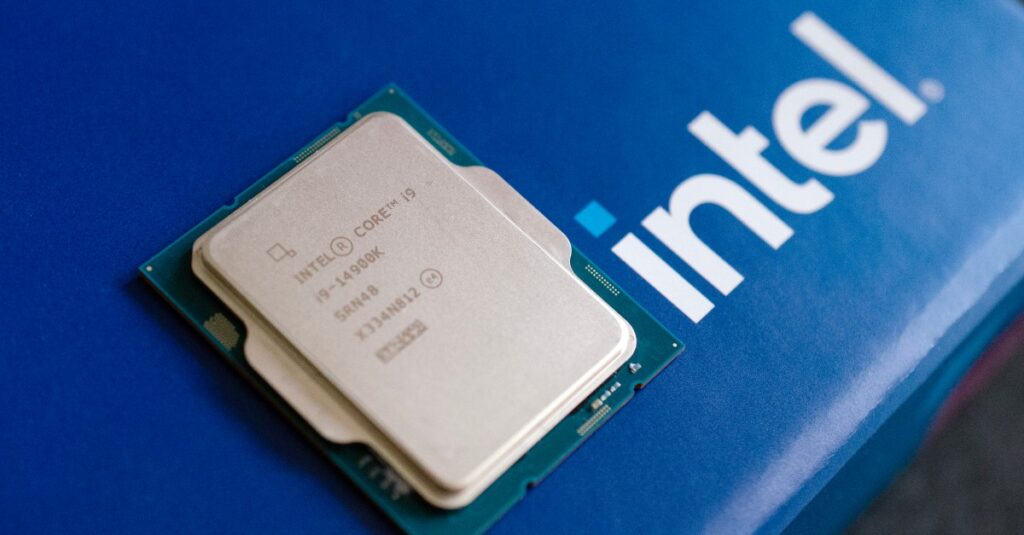
During Intel’s Q3 2025 earnings call, CEO Lip-Bu Tan and CFO David Zinsner reported the company’s first profit in nearly two years, largely supported by recent initiatives. However, they acknowledged existing chip shortages that are anticipated to peak in the first quarter of next year. As a response to these challenges, Intel plans to focus on AI server chips rather than lower-end consumer processors.
The company projected a decline in Client Computing Group (CCG) sales while expecting significant growth in Data Center and Artificial Intelligence (DCAI) operations. Tan mentioned the introduction of annual AI GPU releases to meet the rising demand for AI server components, although it remains unclear how this will affect the development of Intel’s gaming GPUs.
Intel is also preparing to launch its new Panther Lake architecture, which is expected to showcase advanced consumer PC chips. However, the company indicated that it will only release one SKU this year, with additional rollouts planned for 2026. Zinsner suggested that Panther Lake could be costly, noting that the company would need to promote its existing Lunar Lake chips during the first half of the year instead.
While Intel has minimized claims of poor yields associated with its 18A process, Zinsner admitted that current yields are sufficient for supply but not adequate for optimal margins. He estimated that it may take until 2026 or 2027 to achieve desirable yield levels.
Intel aims to collaborate closely with customers to maximize output and adjust pricing strategies to favor products with existing demand. Tan reiterated a cautious approach to investment, indicating no expansion of capacity unless external demand is secured. Despite earlier concerns, Tan expressed renewed confidence in the 14A process, suggesting that customer interest has improved its outlook. This contrasts with the earlier uncertainty about the future of Intel’s next-generation processes.
Source: https://www.theverge.com/tech/805652/intel-q3-2025-earnings-18a-panther-lake-ai-gpus-annual