
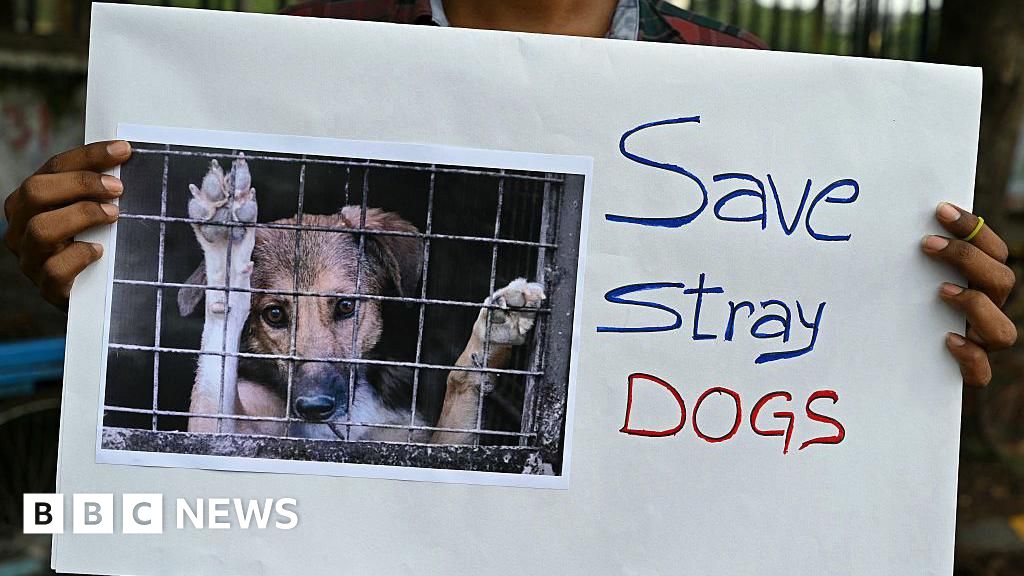
India’s Supreme Court has revised its earlier order regarding the management of stray dogs in Delhi and surrounding areas, following significant protests from animal welfare organizations. The three-judge bench determined that stray dogs should be returned to their original locations after receiving vaccinations and sterilizations. However, dogs that are rabid or exhibit aggressive behavior are to be immunized and housed in shelters.
The court’s latest ruling includes a prohibition on feeding stray dogs in public spaces, mandating the establishment of designated areas for this purpose. Concerns about the increasing incidence of dog bites and related rabies cases in Delhi prompted the initial order on August 11, which had called for the capture of all stray dogs and their confinement in shelters.
Local municipal sources estimate that Delhi is home to about one million stray dogs, with neighboring regions like Noida, Ghaziabad, and Gurugram also experiencing population growth. India accounts for approximately 36% of the global rabies-related fatalities, according to the World Health Organization.
The Supreme Court’s previous directive faced opposition as it contradicted existing laws allowing for the release of sterilized strays. Animal welfare advocates argued for more humane approaches, advocating for vaccination and neutering instead of mass confinement, citing concerns about overcrowding and the potential for euthanasia.
In light of the backlash, the court established a three-judge bench to reconsider the decision. The revised ruling permits the release of non-aggressive, non-infected dogs back to their original locations following medical interventions. The court has also indicated that individuals wishing to adopt strays can do so through municipal channels, although these dogs cannot be returned to the streets.
Additionally, the Supreme Court plans to create a national policy addressing stray dogs, as similar cases in various states are pending. The latest decision has garnered support from animal welfare groups, though some advocates have emphasized the need for clear criteria for identifying aggressive dogs to prevent possible misuse of the order.
Source: https://www.bbc.com/news/articles/c5yejnze4p1o?at_medium=RSS&at_campaign=rss