
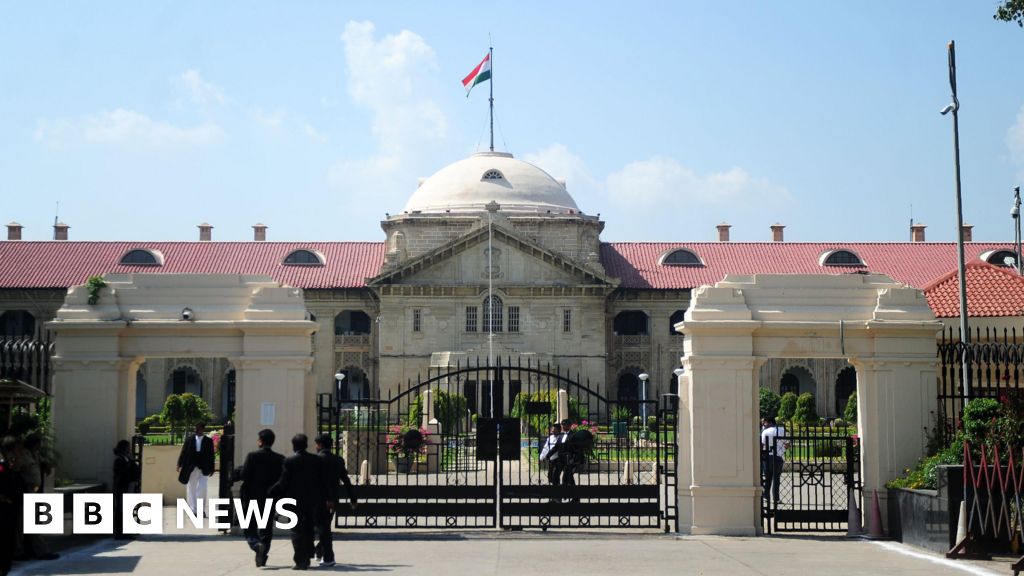
The Allahabad High Court, one of India’s oldest and most significant judicial institutions, is facing a significant backlog, with over one million cases pending. This situation affects a wide array of legal matters, including criminal trials, property disputes, and family cases, often leaving individuals in Uttar Pradesh, the country’s most populous state, in prolonged legal uncertainty.
One case exemplifying this issue is that of Babu Ram Rajput, a 73-year-old retired government employee, who has struggled for over 30 years with a property dispute stemming from a 1992 auction. The unresolved nature of his case reflects the broader challenges faced by the court, driven by an insufficient number of judges and an overwhelming influx of new cases.
Currently, the Allahabad High Court has a sanctioned capacity of 160 judges that has not been fully staffed, contributing to significant delays across the judicial process. Each judge reportedly manages hundreds of cases daily, often resulting in insufficient time per case and many cases not being heard at all.
Lawyers indicate that urgent matters tend to be prioritized, pushing older cases down the list. Senior attorney Syed Farman Naqvi notes that many urgent cases receive temporary resolutions that do not address the underlying issues, leaving them unresolved. The critical condition of the court has prompted discussions on the need for additional judicial appointments.
A group of lawyers has previously petitioned for more judicial personnel, asserting that the existing workforce is inadequate for handling the current case volume. This concern has also gained traction with the Supreme Court of India, which has characterized the situation as “worrisome.”
Calls for establishing additional benches of the high court within the state have been made to ease the strain on the existing structure, though past suggestions have not been implemented. Experts highlight that while creating new benches might be beneficial in the long run, immediate solutions like appointing more judges are essential for alleviating the backlog. However, the process for judicial appointments is known to be lengthy and complex, with recent efforts yielding limited outcomes in addressing the vacancy challenge.
Source: https://www.bbc.com/news/articles/c4gz4y4p80po?at_medium=RSS&at_campaign=rss