
Nvidia and China’s Chip Development Landscape
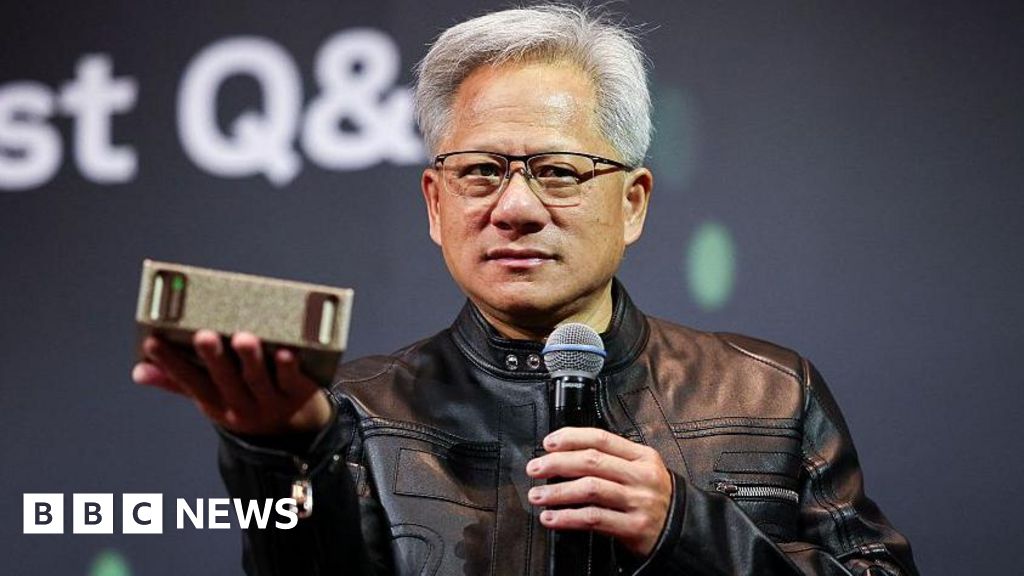
The United States has long held a leading position in the global technology sector, but China is actively seeking to alter this dynamic. Beijing is investing significantly in artificial intelligence (AI), robotics, and, crucially, the production of high-end chips that are essential for these technologies. Jensen Huang, CEO of Nvidia, recently stated that China is “nanoseconds behind” the U.S. in chip development, raising the question: Can China achieve technological parity with the United States and reduce its dependence on imported chips?
In a notable development, China’s startup DeepSeek launched a product in 2024 aimed at competing with OpenAI’s ChatGPT. This initiative reportedly required fewer resources to develop compared to leading AI models, raising eyebrows in the tech community as it momentarily affected Nvidia’s market valuation. Additionally, major Chinese tech firms have articulated plans to compete with Nvidia and become the primary suppliers of advanced chips domestically. Recent reports indicated that Alibaba has announced a new chip that matches the performance of Nvidia’s H20 semiconductors while also being more energy-efficient. Meanwhile, Huawei aims to bolster its competitive stance with new powerful chips and a plan to offer its designs to local firms to encourage the use of domestically produced technology.
Several other Chinese companies, such as MetaX and Cambricon Technologies, are also making strides in the chip market, with significant contracts and rising stock values as they align with China’s push for local chip production. However, industry experts caution that the claims made by these companies should be regarded with skepticism due to inconsistent data and benchmarks. Although Chinese semiconductors show promise in certain applications, they generally lag behind U.S. chips in complex analytics.
China’s advances come alongside broader geopolitical tensions and ongoing trade negotiations with the U.S., as well as challenges related to technology reliance and supply chain development. While the landscape is evolving, experts believe that a continued commitment to innovation and competition will be crucial for both nations.
Source: https://www.bbc.com/news/articles/cgmz2vm3yv8o?at_medium=RSS&at_campaign=rss