
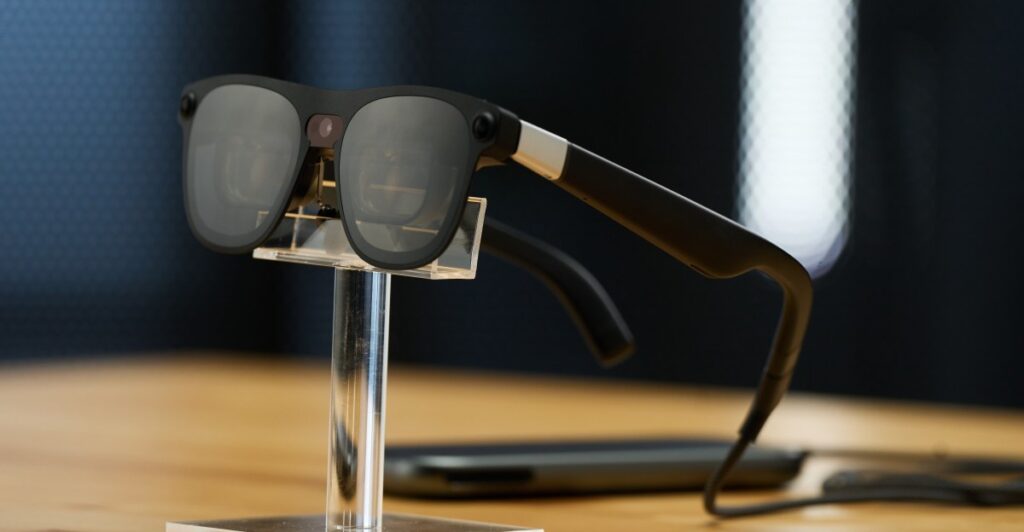
Project Aura has been introduced as a collaboration between Xreal and Google, teased at Google I/O and set for launch in 2026. It is recognized as the second Android XR device, following Samsung’s Galaxy XR headset. During a recent demonstration, the device’s classification as “smart glasses” raised questions regarding its design and functionality, as it resembles chunky sunglasses connected to a battery pack that also serves as a trackpad. Google’s representatives noted that they describe it as a headset categorized as “wired XR glasses.”
The device allows users to connect wirelessly to a laptop and create a virtual desktop, featuring a field of view of up to 70 degrees. Users can simultaneously use applications like Lightroom and YouTube and interact with 3D games, thereby resembling experiences offered by other XR headsets. Notably, Google representatives stated that the applications and features demonstrated on Project Aura were originally developed for the Galaxy XR, which suggests substantial compatibility.
However, XR technology is currently facing challenges with a lack of third-party apps, which can hinder wider adoption. This limitation exists not only for existing XR devices from Meta and Apple but also potentially affects new entrants like Xreal. Project Aura’s positioning within the Android ecosystem allows for broader app access, as developers can leverage existing applications for their devices.
In addition, Google’s new prototype AI glasses were showcased, including features such as live translations and integration with existing apps like Uber and YouTube Music. One notable aspect of these glasses is their compatibility with iOS, a factor that could potentially enhance their user base compared to competitors.
Google aims to address past shortcomings by partnering with multiple hardware manufacturers, avoiding controversial designs associated with earlier smart glasses, and ensuring a focus on privacy with visible indicators for recording functions. Nonetheless, the success of Project Aura and its future iterations will depend on how well these technologies are received upon launch and their overall effectiveness in solving prevailing issues in the XR space.
Source: https://www.theverge.com/tech/839392/project-aura-android-xr-software-headsets-ai-glasses