
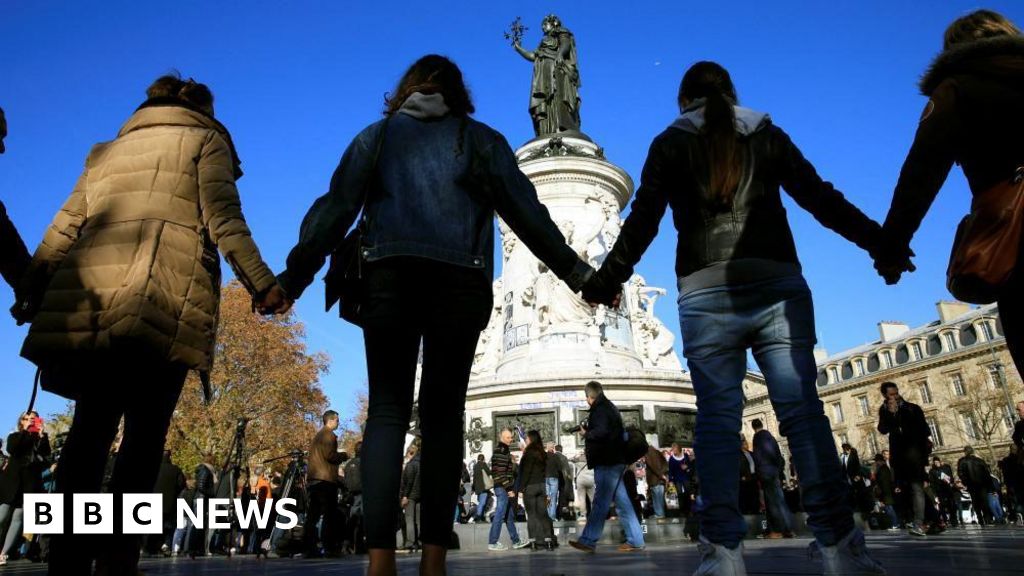
As France observes the tenth anniversary of the November 2015 Bataclan attacks, recent developments highlight ongoing concerns regarding jihadist threats. A 27-year-old woman, identified as Maëva B, who was in correspondence with Salah Abdeslam—the only surviving attacker from the assaults—was arrested on suspicions of planning a violent act. Abdeslam, currently serving a life sentence in Belgium, was found to have received a USB drive containing jihadist propaganda after communications with Maëva B, prompting authorities to investigate her online activities.
The coordinated attacks on November 13, 2015, resulted in 130 fatalities, including 90 at the Bataclan concert hall, and left over 400 individuals injured. This violence marked a significant event in modern French history, with the term “Bataclan” becoming synonymous with extremist attacks. Although subsequent incidents, such as the Nice truck attack and the beheading of teacher Samuel Paty, have occurred, the scale and organization of the 2015 attacks were unprecedented.
In the last decade, the Islamic State’s diminished presence in the Middle East has reportedly led to a decrease in complex terrorist plots. However, experts suggest a shift towards homegrown threats. As a new generation may be more influenced by peer networks than organized directives, the concept of “ambient jihadism” emerges as a pressing concern.
Significant events are planned for the anniversary, including site commemorations and a garden opening in Paris, capped by lighting the Eiffel Tower in the colors of the French flag. Discussions have also arisen around the possibility of “restorative justice,” with Abdeslam expressing willingness to participate, a proposition that has garnered mixed reactions from victims’ families and the public.
Source: https://www.bbc.com/news/articles/c6291204278o?at_medium=RSS&at_campaign=rss