
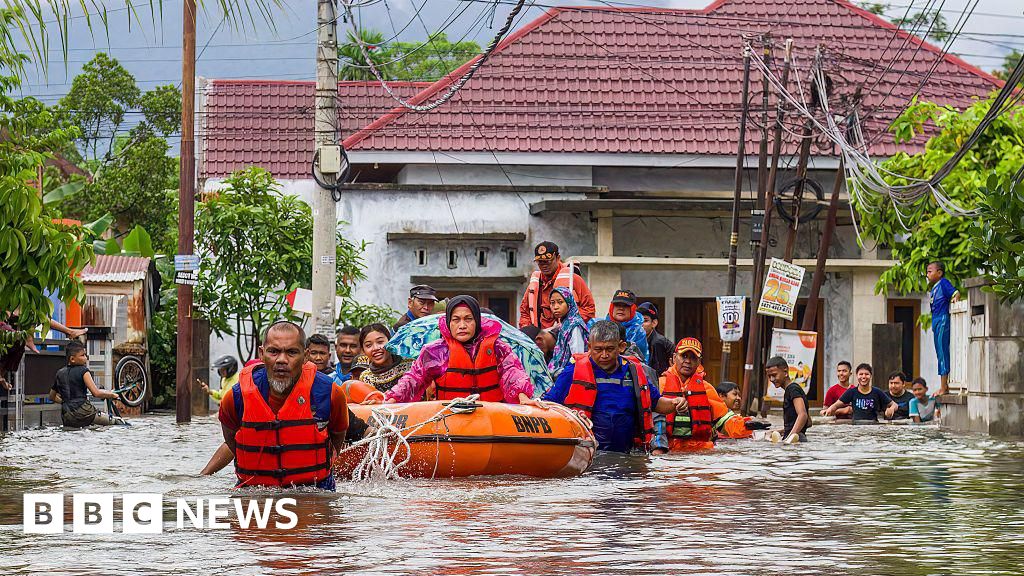
Severe weather conditions have recently impacted parts of southern Asia, leading to significant flooding and landslides. Approximately 600 fatalities have been reported across Indonesia, Thailand, Malaysia, and Sri Lanka, with hundreds still unaccounted for as search and rescue efforts continue.
In Indonesia, heavy rains began on the island of Sumatra, causing catastrophic flooding and landslides, especially in Aceh Province. Local residents have described the rapid rise of floodwaters, which forced many to seek higher ground. As of Saturday, nearly 300 individuals were reported missing, and over 300 deaths, predominantly in Indonesia, have been confirmed. An unusual tropical cyclone, Cyclone Senyar, has been linked to the extreme weather events, leading to extensive property damage and submerged communities.
Thailand has also been severely affected, with rising waters recorded at over 3 meters in some provinces. Reports indicate that at least 145 people have died, making this one of the most severe floods in recent history. Approximately 3.8 million individuals have been impacted, with emergency services overwhelmed in areas like Hat Yai, where rainfall reached record levels.
In Malaysia, flooding has forced numerous residents into shelters, while Sri Lanka has experienced its own crisis with at least 132 deaths and widespread damage from landslides caused by intense rainfall. The Sri Lankan government has declared a state of emergency and is appealing for international aid, as many areas are left without electricity or water.
Meteorologists suggest that the extreme weather may be influenced by climatic interactions involving Typhoon Koto and Cyclone Senyar, complicating the annual monsoon season. They note that climate change is likely affecting storm patterns, leading to increased rainfall and flooding in the region.
Source: https://www.bbc.com/news/articles/c5y9ejley9do?at_medium=RSS&at_campaign=rss