
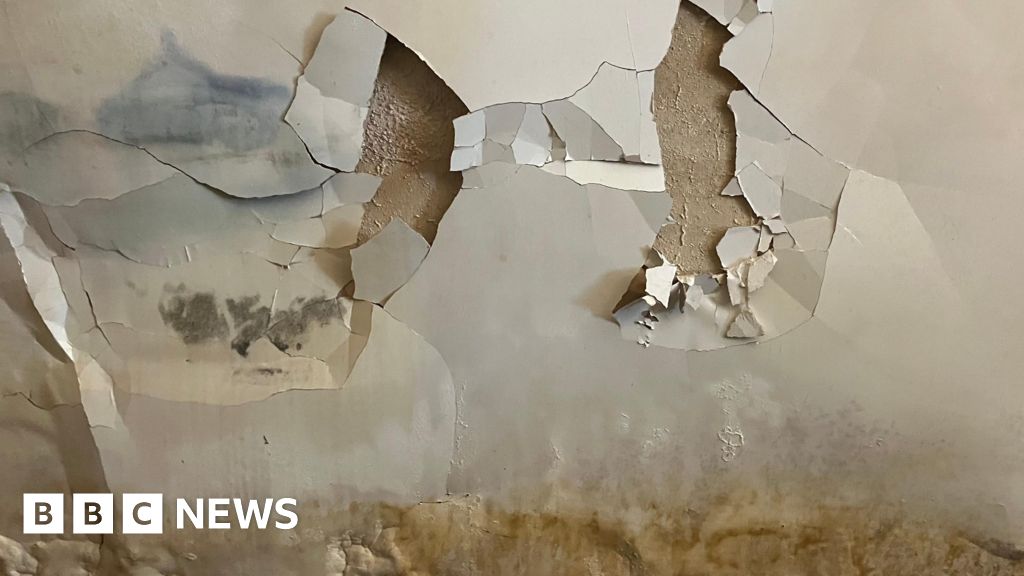
A UK government official has reported significant failures associated with a net-zero insulation initiative that has led to damp issues in many homes. A recent National Audit Office (NAO) report indicated that 98% of the 23,000 homes that received external wall insulation through two specific government schemes may face damp and mold problems if not addressed. The report also highlighted that the health and safety of many homeowners are at risk due to improperly executed insulation work.
During a session before Parliament, Jeremy Pocklington, the senior civil servant at the Department for Energy Security and Net Zero, criticized the level of oversight in these schemes, calling the failures “unacceptable.” External wall insulation typically involves attaching insulation boards to walls and rendering them waterproof; issues arise when moisture becomes trapped behind these boards. The same problems affect about a third of homes insulated through the ECO4 scheme and the Great British Insulation Scheme, which serve residents in England, Scotland, and Wales.
Over the past 20 years, more than three million homes have been insulated under various government initiatives costing billions of pounds. In discussing the NAO report’s findings, Sir Geoffrey Clifton-Brown MP called it the worst testimony he had seen in his 12 years chairing the Public Accounts Committee, accusing the department of negligence.
Pocklington admitted that there had been inadequate oversight of the ECO4 and Great British Insulation schemes by Trustmark, the organization tasked with quality control of the insulation work. He acknowledged systemic failures within the department, emphasizing that sufficient measures were not taken to ensure Trustmark’s effectiveness.
Simon Ayers, Trustmark’s chief executive, noted that his organization had raised concerns about installation issues with the Department since late 2022, although discussions were informal and not formally documented. Pocklington noted that the department had faced pressures due to the COVID-19 pandemic and energy price impacts from the conflict in Ukraine.
When asked about accountability for affected homeowners beyond recent schemes, Pocklington stated that the focus was primarily on the two schemes launched since 2022, emphasizing the department’s responsibility to ensure effective operation and consumer protection in the programs implemented.
Source: https://www.bbc.com/news/articles/c5yp4qllxv1o?at_medium=RSS&at_campaign=rss