
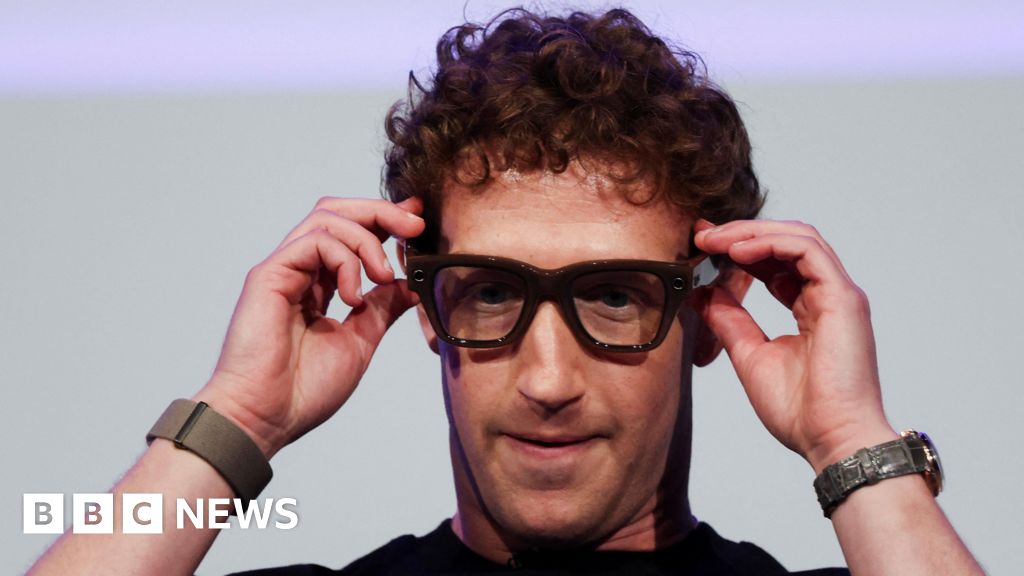
Meta has announced the launch of a new line of smart glasses that incorporate its artificial intelligence (AI) technology. This announcement was made during the annual developers conference, “Meta Connect,” by CEO Mark Zuckerberg. The smart glasses are being developed in collaboration with sunglasses brands Ray-Ban and Oakley. Additionally, Meta introduced a neural wristband that can pair with its Ray-Ban Display glasses to enable users to perform tasks, such as sending messages, using small hand gestures.
These new glasses have a high-resolution, full-color screen in one lens, allowing users to conduct video calls and view messages. The device also features a 12-megapixel camera. Zuckerberg expressed hope that these smart accessories will serve as a significant platform for integrating Meta’s AI, particularly the Meta AI tool, into daily life.
While analysts suggest that the new smart glasses may achieve greater success than Meta’s more extensive Metaverse project, they also emphasize the challenge of convincing potential users that the benefits of owning AI-enabled glasses justify the cost. The Display model is priced at $799 and will be available this month, which is significantly higher than Meta’s previous smart glasses offerings. The company has reportedly sold approximately two million pairs of smart glasses since entering the market in 2023.
Meta is currently investing heavily in its AI operations, planning to allocate hundreds of billions of dollars towards constructing AI data centers in the U.S. One of the planned sites is expected to encompass an area comparable to Manhattan. This investment also involves recruiting top talent from competing firms to enhance its AI capabilities.
The announcement of the new tech comes amid ongoing scrutiny of Meta’s impact on users, particularly concerning children’s safety on its platforms. Recently, activists and family members protested at Meta’s New York headquarters, calling for more protective measures for children, following testimonies from former employees regarding potential harms associated with Meta’s virtual reality products. The company has denied these allegations.
Source: https://www.bbc.com/news/articles/c5y599yz0l3o?at_medium=RSS&at_campaign=rss