
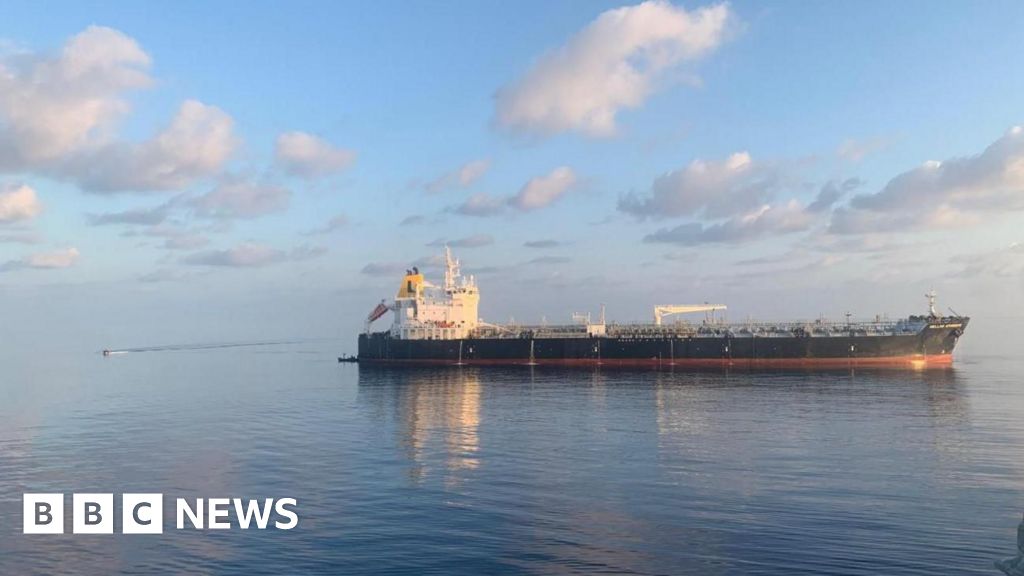
European Union naval forces have conducted a rescue operation for 24 sailors aboard a Maltese-flagged oil tanker, the Hellas Aphrodite, which was attacked by pirates off the coast of Somalia. The tanker, en route from India to South Africa carrying petrol, was seized on Thursday when armed pirates opened fire with machine guns and rocket-propelled grenades before boarding the vessel.
During the attack, the crew secured themselves inside a fortified citadel, allowing them to protect themselves while the assailants took control of the ship. On Friday afternoon, the Spanish warship ESPS Victoria, part of the EU’s anti-piracy mission Operation Atalanta, reached the tanker. Special forces then boarded the vessel and confirmed that all 24 crew members were unharmed.
The EU mission reported that there were no injuries and that the crew maintained communication with Operation Atalanta while in the citadel. The report indicated that a “show of force” by naval forces may have prompted the pirates to abandon the vessel before the warship arrived. However, it was noted that the threat level in the area remains “critical,” as the pirates are still active in the vicinity.
The rescue operation involved various assets, including a helicopter, drone, and surveillance aircraft. Just hours before the rescue, another vessel in the same region encountered a small speedboat but successfully evaded it. This incident is part of a broader pattern of recent attacks that have raised concerns about a potential resurgence of piracy. Historically, such activities had decreased due to international naval patrols and security measures introduced after a peak more than a decade ago.
The International Maritime Bureau reported seven incidents of piracy off the coast of Somalia last year, which included three hijackings, and noted only one incident thus far in 2023. Escalating attacks by Yemen’s Houthi rebels on ships in the Red Sea have led to increased maritime traffic through East Africa’s Indian Ocean, posing new opportunities for Somali pirates.
Source: https://www.bbc.com/news/articles/cyv8137q060o?at_medium=RSS&at_campaign=rss