
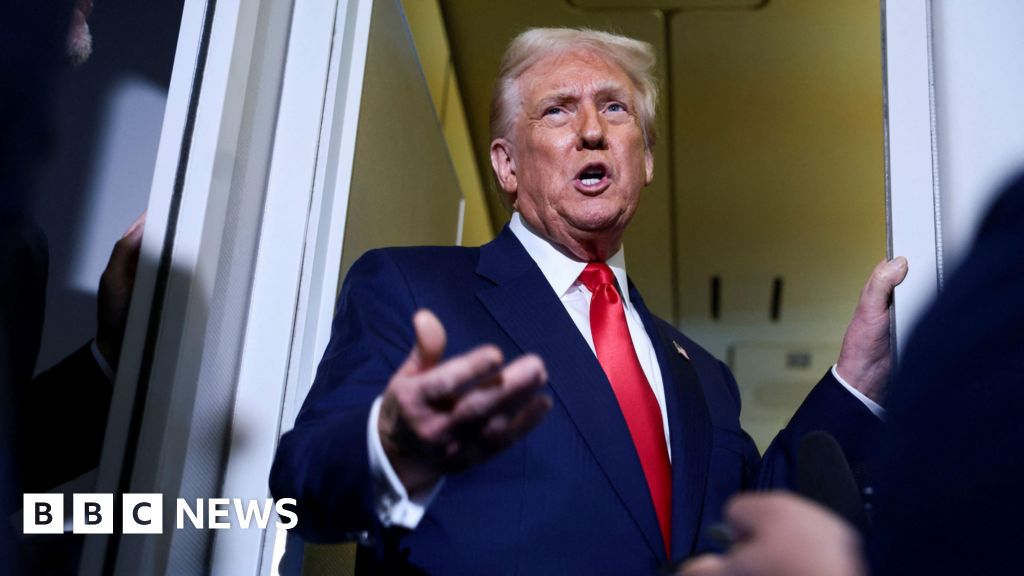
President Donald Trump recently declared that the United States will commence testing nuclear weapons, which may signify a notable change in the nation’s defense policy. In a post on his social media platform, Truth Social, he stated, “Because of other countries’ testing programs, I have instructed the Department of War to start testing our Nuclear Weapons on an equal basis.” The announcement came as he prepared to meet with the Chinese president.
Details surrounding the scope of these tests remain unclear, specifically whether they pertain to nuclear delivery systems or the weapons themselves. Following his initial announcement, Trump indicated that decisions regarding test sites would be made at a later time. The absence of clarity from the White House has raised questions among experts regarding the implications of renewing nuclear tests.
Historically, nuclear-armed nations periodically test their weapons systems, though North Korea has been the only country to test an actual nuclear weapon since 1990, with its last test occurring in 2017. Experts express concern that renewed U.S. nuclear testing could escalate an ongoing nuclear arms race, particularly when considering current geopolitical tensions involving nuclear-capable states like Russia and China.
Statistics from think tanks such as the Stockholm International Peace Research Institute (SIPRI) indicate that Russia possesses more nuclear warheads than the U.S. (5,459 compared to 5,177). These figures contradict Trump’s assertion that the U.S. maintains a larger nuclear arsenal. The potential for resumed U.S. testing may prompt similar actions from both Russia and China, with a Kremlin spokesman indicating they would respond if the U.S. abandons its testing moratorium.
As nuclear tensions rise globally, experts point to ongoing conflicts involving nuclear powers, including the situation in Ukraine, as well as regional tensions in South Asia and the Korean Peninsula. The upcoming expiration of the last nuclear arms treaty between the U.S. and Russia in February poses additional concerns for future nuclear stability.
Source: https://www.bbc.com/news/articles/czxn00l00r6o?at_medium=RSS&at_campaign=rss