
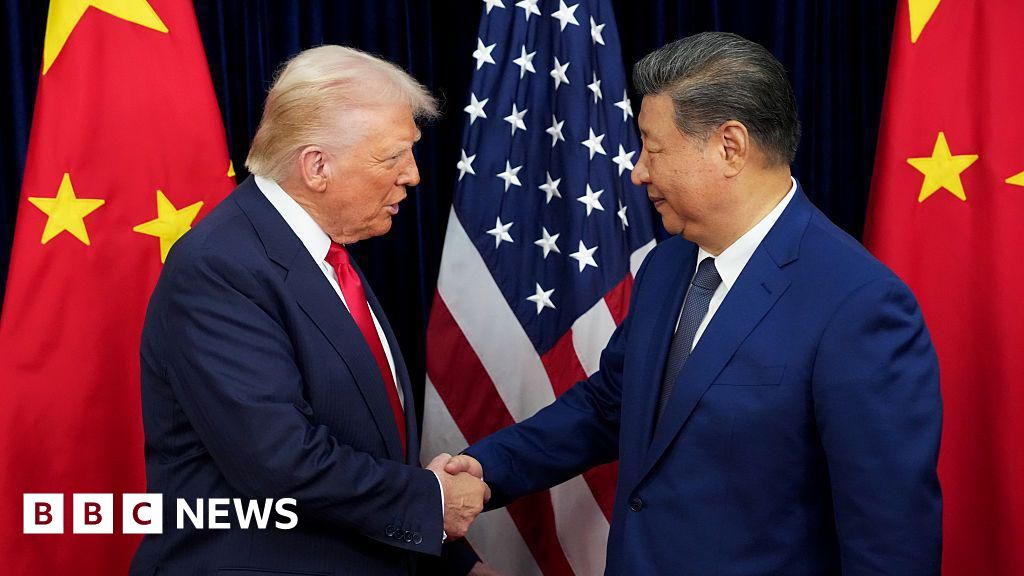
China will begin to lift an export ban on automotive computer chips essential for global car production as part of a trade agreement with the United States, according to a statement from the White House. The agreement was confirmed following a meeting between Chinese President Xi Jinping and U.S. President Donald Trump in South Korea.
In addition to the chip exports, the deal includes provisions regarding U.S. soybean exports, the supply of rare earth minerals, and materials related to the production of fentanyl. This agreement aims to de-escalate a trade conflict that has intensified since Trump imposed tariffs on China after taking office, a move that spurred retaliatory tariffs and uncertainty in global markets.
While the specifics were summarized in a fact sheet released by the White House, Trump and other officials had previously discussed the outcomes of the meeting, describing the talks as positive and noting that both countries reached a consensus on several significant trade issues. However, China did not immediately provide detailed information about the agreement.
One of the notable elements in the deal is the resumption of automotive chip exports from Nexperia, a company with production facilities in China. Concerns had been raised about potential global supply chain disruptions due to chip shortages. Nexperia is owned by a Chinese entity but is based in the Netherlands; approximately 70% of its chips produced in Europe are sent to China for completion before being exported elsewhere.
Furthermore, China will temporarily pause its export controls on rare earth minerals, which are crucial for various industries, including automotive and aerospace. The agreement also includes the U.S. reducing tariffs linked to fentanyl imports, while China commits to implementing significant measures to address the issue. Lastly, China has pledged to purchase 12 million tons of U.S. soybeans in late 2025 and 25 million tons annually for the subsequent three years.
Source: https://www.bbc.com/news/articles/cy5qgy93w9go?at_medium=RSS&at_campaign=rss