
In Chicago, discussions are intensifying regarding proposed deployments of National Guard troops following a spike in violent crime. Recent incidents, particularly a drive-by shooting in the Bronzeville neighborhood that injured seven people, highlight ongoing safety concerns. Over the Labor Day weekend, the city reported at least 58 shooting incidents, including eight fatalities. In context, the labor holiday saw President Trump announce potential National Guard support for cities experiencing significant crime increases.
Local leaders, including Rob White, who coaches youth aimed at steering them away from gang involvement, expressed skepticism regarding militarized responses. White’s colleague Kanoya Ali emphasized that community-led efforts were already making an impact in crime reduction. Meanwhile, Superintendent Larry Snelling of the Chicago Police Department clarified the limitations of the National Guard, noting that they lack police powers and would require close coordination with law enforcement.
Critics of a military response argue that the violent crime rate, although still higher than many U.S. cities, has decreased significantly over the past two years, with a notable drop in homicides and shooting victims. This data contrasts with Trump’s statements, which characterized urban crime as “out of control.” Governor JB Pritzker of Illinois has publicly opposed deploying troops in response to crime, describing Trump’s stance as irrational.
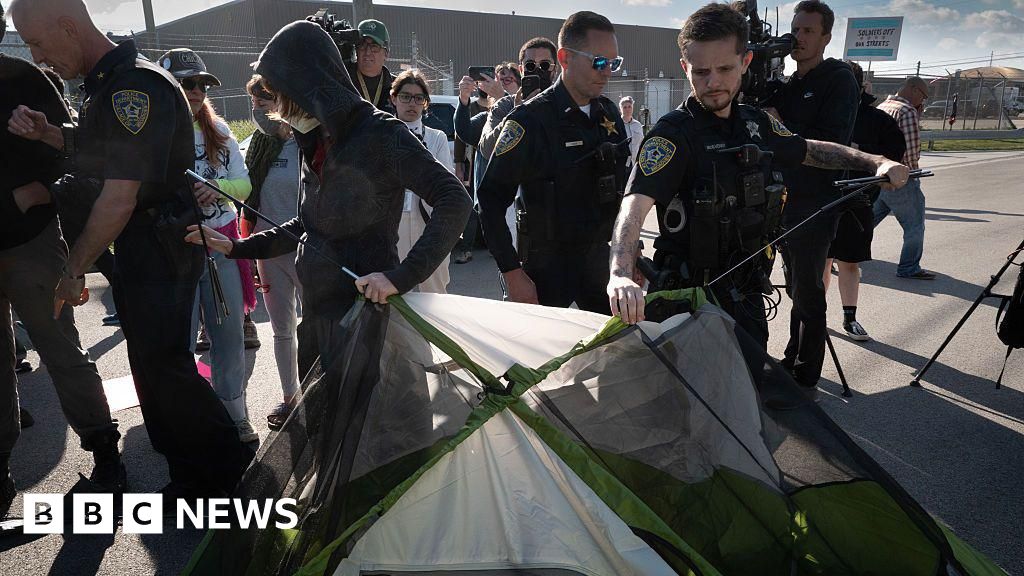
Concerns extend beyond crime to immigration, as the Latino community, which constitutes over 800,000 residents in Chicago, fears potential ICE operations akin to those in other cities. Local activists postponed the El Grito Chicago festival due to worries about safety amid heightened enforcement actions. As the situation develops, questions remain regarding the efficacy and implications of deploying military forces in urban settings to address crime and immigration issues.
Source: https://www.bbc.com/news/articles/c4gj489q6e0o?at_medium=RSS&at_campaign=rss