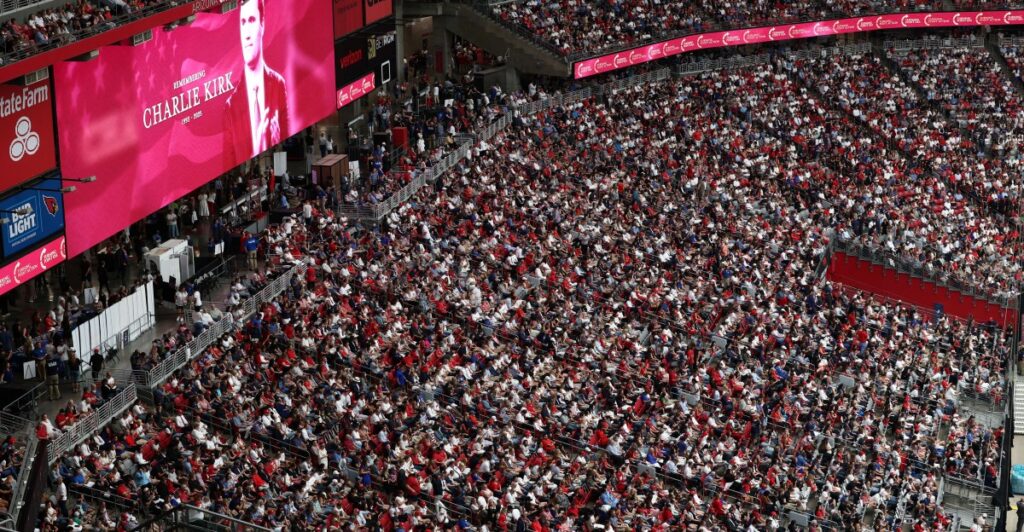
During the memorial service of Charlie Kirk in Glendale, Arizona, speakers noted his status as a devoted evangelical figure, with the term “martyr” used sparingly, primarily by select political allies, including Donald Trump Jr. and President Trump. Kirk, a co-founder of Turning Point USA, was recognized for his efforts to engage college students with Christian teachings, a focus echoed by attendees who appeared more drawn to a religious revival than political messaging.
Reports suggest that figures associated with the Trump administration aimed to galvanize the evangelical audience present, potentially leveraging Kirk’s death for political gain. Notably, prior discussions indicated the possibility of a military recruitment initiative based on Kirk’s influence on college campuses.
Following the memorial, Brendan Carr, an FCC commissioner, pressured Disney into suspending late-night host Jimmy Kimmel due to a joke related to Kirk’s alleged killer. This action raised questions about free speech and government influence, as Carr’s threats to revoke broadcast licenses were viewed as a clever but questionable use of regulatory powers.
Carr’s accountability reflects a broader concern regarding First Amendment rights under the Trump administration. Critics argue that government actions are exploiting existing loopholes to infringe upon free expression. Moreover, concerns have been voiced about an environment where corporate monopolies could dictate media narrative and operational dynamics in subtle yet impactful ways.
Moving forward, as public sentiment plays a vital role in shaping corporate decisions, Strategies such as organized boycotts against companies like Disney could be effective in voicing concerns. However, the interplay of public pressure and congressional action will be critical in addressing the underlying issues of speech rights and media regulation.
Source: https://www.theverge.com/column/784033/charlie-kirk-memorial-jimmy-kimmel-fcc-regulator