
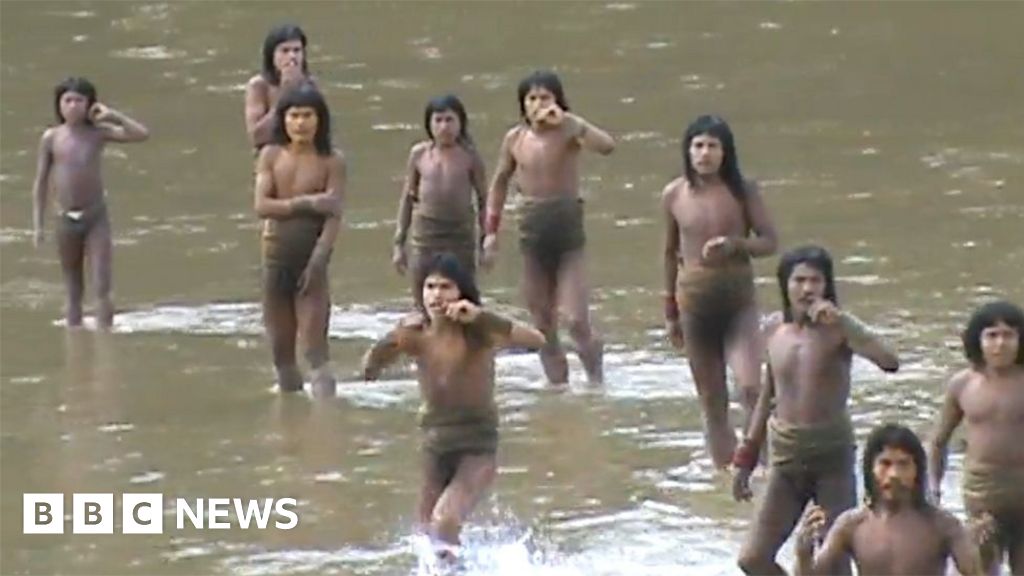
In the Peruvian Amazon, Tomas Anez Dos Santos encountered members of the Mashco Piro, an indigenous group that has largely avoided contact with outsiders for over a century. While tending to a clearing in the forest, Tomas reportedly felt surrounded by the Mashco Piro, who use bows and arrows for hunting. The Mashco Piro’s choice to remain isolated raises questions about their interactions with the outside world, particularly as more of them have been spotted near the small fishing village of Nueva Oceania.
A recent report by Survival International indicates that there are at least 196 uncontacted groups globally, with the Mashco Piro being the largest. It warns that half of these groups may face extinction in the next decade unless better protective measures are implemented, particularly in response to threats from logging, mining, and potential exposure to diseases brought by outsiders.
Locals in Nueva Oceania, which comprises about seven or eight families, express mixed feelings about the Mashco Piro. They’ve experienced both fear of potential conflict and a desire to protect their neighbors. The area is not officially sanctioned as a reserve for uncontacted groups, leading to logging activities that disrupt the Mashco Piro’s habitat. Tomas has taken to planting food for them to ease tensions.
Peruvian government policy discourages contact with isolated tribes to prevent catastrophic consequences from introduced diseases. Historical context, such as the fate of the Nahau and Muruhanua peoples who suffered high mortality rates after initial contact, underscores the risks involved.
At a more recognized control post along the Manu River, agents monitor another Mashco Piro group and provide assistance when needed. These efforts seem somewhat effective in maintaining limited contact, yet the Mashco Piro appear to express little interest in integrating with outside society. The situation in both areas highlights the complexities of safeguarding uncontacted communities amidst modern challenges.
Source: https://www.bbc.com/news/articles/cjw92x915xlo?at_medium=RSS&at_campaign=rss