
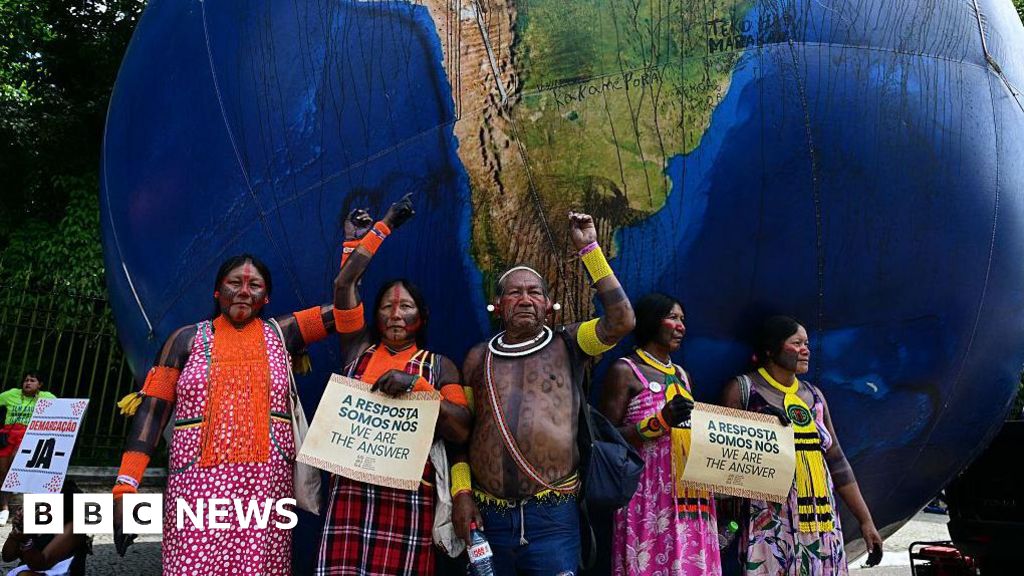
The Brazilian government has designated 10 new Indigenous territories following protests at the COP30 climate summit in Belém. This designation includes areas such as parts of the Amazon and aims to protect the culture and environment of Indigenous populations, although enforcement of such protections has varied.
President Luiz Inácio Lula da Silva, whose administration previously recognized 11 Indigenous territories last year, formalized this latest measure through a presidential decree. Thousands of protesters at the UN’s annual climate conference have advocated for immediate demarcation of these lands, with some demonstrators, including Indigenous representatives, clashing with security personnel during the event.
Historically, recognized Indigenous reserves have prohibited activities like mining and logging and restricted commercial farming to mitigate deforestation. A study indicates that expanding Indigenous territories may prevent up to 20% of further deforestation and reduce carbon emissions by 26% by 2030, according to groups including the Articulation of Indigenous Peoples of Brazil.
The newly protected areas span hundreds of thousands of hectares and are home to various Indigenous groups, including the Mura, Tupinambá de Olivença, Pataxó, Guarani-Kaiowá, Munduruku, Pankará, and Guarani-Mbya. One of the new territories overlaps significantly with the Amazon National Park, highlighting its ecological importance for global climate regulation.
These announcements coincide with Indigenous Peoples’ Day at COP30. Until Lula’s administration, no new Indigenous lands had been designated since 2018. His predecessor, Jair Bolsonaro, whose policies encouraged resource extraction on Indigenous lands, often neglected to enforce existing protections. The current total of recognized Indigenous lands in Brazil is approximately 117.4 million hectares, reflecting 13.8% of the country’s territory, where numerous Indigenous groups reside.
The Amazon rainforest is increasingly threatened by deforestation, with ongoing discussions at COP30 focused on strategies for maintaining global temperature rises below critical thresholds associated with severe climate impacts.
Source: https://www.bbc.com/news/articles/c1d0vekq12ro?at_medium=RSS&at_campaign=rss