
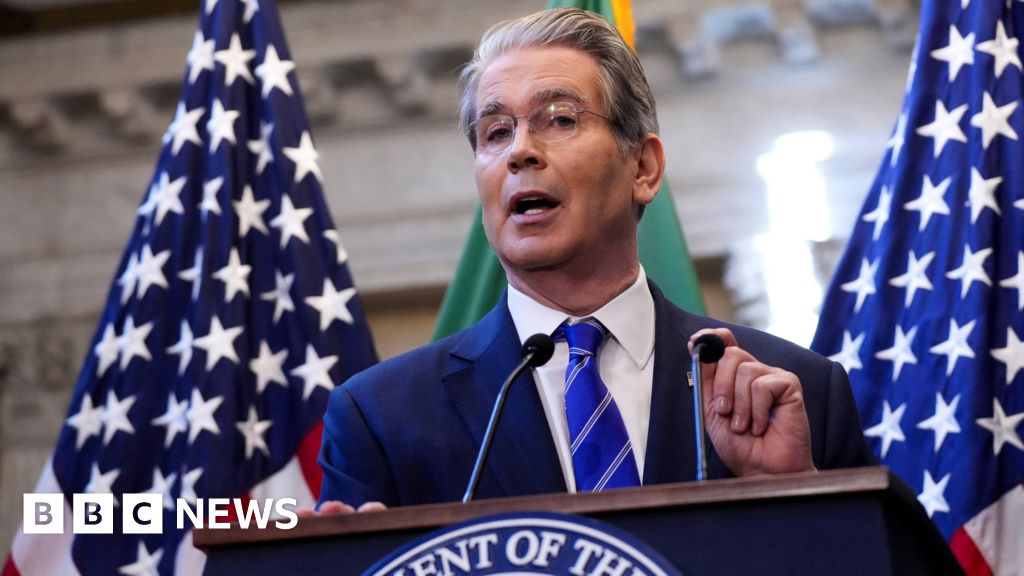
US officials have accused China of violating a trade agreement established earlier this year, marking a significant increase in tension between the two nations. US Trade Representative Jamieson Greer and Treasury Secretary Scott Bessent criticized China’s recent decision to restrict exports of rare earth elements, labeling it as “economic coercion” and a strategy for acquiring global supply chain influence.
Bessent stated, “If China wants to be an unreliable partner to the world, then the world will have to decouple.” Despite this criticism, US officials expressed a willingness to negotiate, questioning whether China would follow through on its announced export controls. Greer remarked on the “unimaginable” complexity of implementing China’s tightened export regulations.
China currently dominates approximately 90% of the global market for rare earths and magnets, which are essential for high-tech manufacturing and are components in various products, including cars and smartphones. This dependency places significant pressure on US trade discussions, as many American firms rely heavily on these materials.
The new regulations require foreign companies to obtain Chinese government approval to export products containing rare earth elements and specify their intended use. Additionally, similar restrictions have been put in place for lithium batteries and certain forms of graphite, vital for the technology supply chain.
In response, the US is considering imposing an additional 100% tariff on imports from China, with plans to also implement export controls on critical software. This comes as both nations begin charging new port fees on vessels from each other, indicating further deterioration in their trading relationship.
The rise in trade tensions raises concerns about a possible return to a broader trade conflict, especially as a meeting between US President Trump and Chinese President Xi Jinping approaches. Following a May agreement to reduce high tariffs, trade has seen new levies imposed, complicating the relationship further. Bessent noted that American automotive companies have already raised alarms about potential supply chain disruptions, emphasizing the need for collaboration among the US and its allies in response to China’s actions.
Source: https://www.bbc.com/news/articles/c5y45x5g140o?at_medium=RSS&at_campaign=rss