
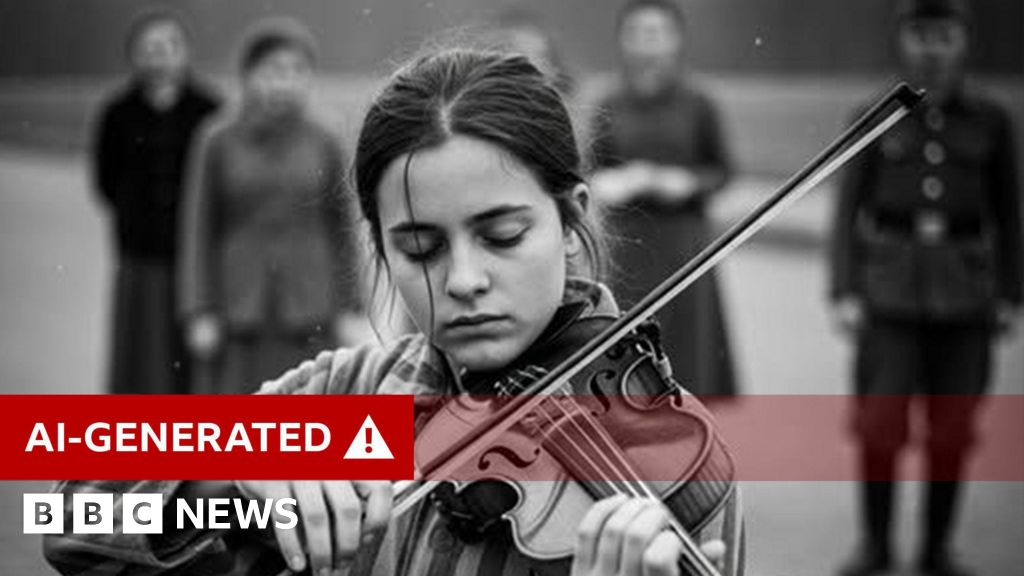
An investigation by the BBC has revealed that a network of content creators is posting AI-generated images purportedly depicting Holocaust victims on Facebook. Organizations dedicated to Holocaust remembrance report that these images are causing distress among survivors and their families, raising concerns about the manner in which the Holocaust is being portrayed on social media platforms.
Accounts associated with this network are based predominantly in Pakistan and are reportedly monetizing content through Meta’s content monetization program, which compensates users for high-performing posts. Some accounts have claimed earnings in the tens of thousands of dollars, with a noted individual claiming to have received over 1.2 billion views on content in a few months. The images being distributed often depict fictional scenarios, such as a child hiding or a couple meeting at a concentration camp boundary, garnering significant engagement on social media.
Representatives from the Auschwitz Memorial have expressed concern over the spread of these AI-generated images, highlighting that they distort historical facts and disrespect the memory of victims. In June, the Auschwitz Museum specifically warned about these accounts that use AI to create misleading historical depictions.
The BBC’s investigation found that the practice seems to be tied to financial incentives, with creators noting that accounts with substantial followings can generate significant income. Some creators have shared how to exploit AI to fabricate historical images, including mentions of the Holocaust as a potential topic. This trend has raised alarm about the potential for misinformation regarding historical events, particularly as there are fears it may lead to a perception that such histories are fictional or manipulated.
Meta has responded to concerns by removing several offending profiles and groups after they were flagged for impersonation and deceptive practices, stating that while the images did not directly violate content policies, they breached rules concerning inauthentic behavior.
Source: https://www.bbc.com/news/articles/ckg4xjk1g1xo?at_medium=RSS&at_campaign=rss