
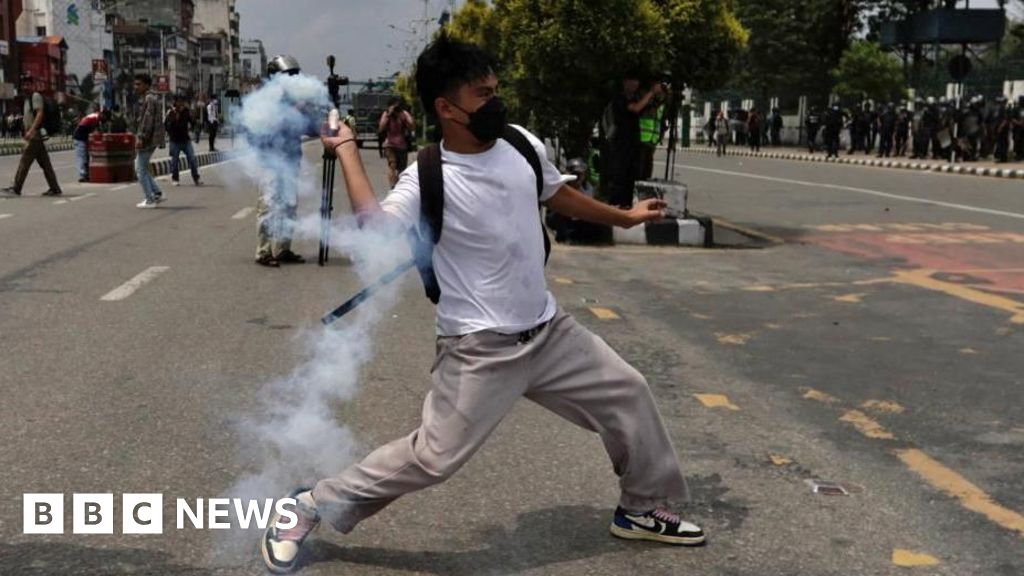
At least 13 individuals have lost their lives, and numerous others have sustained injuries in Nepal following protests against a government-imposed ban on certain social media platforms. Demonstrators identifying as part of Generation Z organized rallies near the parliament building in Kathmandu to voice their opposition to the ban on platforms such as Facebook, X, and YouTube.
In response to the protests, Nepal’s Minister for Communication, Prithvi Subba, indicated that law enforcement utilized various measures, including water cannons, batons, and rubber bullets, to disperse the crowds. The government has defended the ban by stating that it aims to regulate social media to combat issues like fake news, hate speech, and online fraud. Despite this rationale, platforms such as Instagram have a significant user base in Nepal, where many individuals depend on these services for entertainment, news, and business purposes.
Protesters displayed placards with messages like “enough is enough” and “end to corruption,” reflecting their dissatisfaction with the government’s approach, which some perceive as authoritarian. Tensions escalated when demonstrators breached a restricted area near parliament, prompting law enforcement to deploy tear gas and water cannons, according to police spokesperson Shekhar Khanal.
In light of the unrest, a curfew has been instituted around the parliament building. Previously, the authorities had mandated a ban on 26 social media platforms after they failed to register with the Ministry of Communication and Information Technology by a designated deadline. Although users have faced challenges accessing these platforms since the ban commenced, some are reportedly using VPNs to bypass the restrictions. So far, two platforms have resumed operations after completing the registration process. The government has asserted that the goal is not to ban social media but to align it with Nepali law.
Source: https://www.bbc.com/news/articles/c78nd2zy9jgo?at_medium=RSS&at_campaign=rss